

Director: James Riordan
Music: Anna Mullarkey
An Taibhdhearc and Brú Theatre present a dramatic reimagining of two of Galway writer Padraic O’Conaire’s Scothscéalta (Short Stories): Neill tells the story of pawnbroker Nell while Páidín brings the character of a West of Ireland fisherman to the stage. O’Conaire wrote in Irish – as Gaeilge – and the plays are performed as Gaeilge, delivered in fluent, accented speech. What surprises about both pieces is just how thematically dark they are, each protagonist utterly altered by a calamitous event which overtakes the trajectory of their lives. The first play, Neill, approaches its themes of simmering revenge, obsession and cruelty with a relatively light touch, incorporating comedy and surrealism into the tale of Nell (Caitríona Ní Mhurchú), spurned by her lover and condemned to spend her years watching his married life play out in the house across the street. Music by composer Anna Mullarkey teases out and accentuates the dramatic highs and lows, incorporating soft jazz tones with electronica, and is very much a key element in the production. The set is basic but functions perfectly, visibility into Nell’s room drawing the audience into her mindset as she plots and schemes.
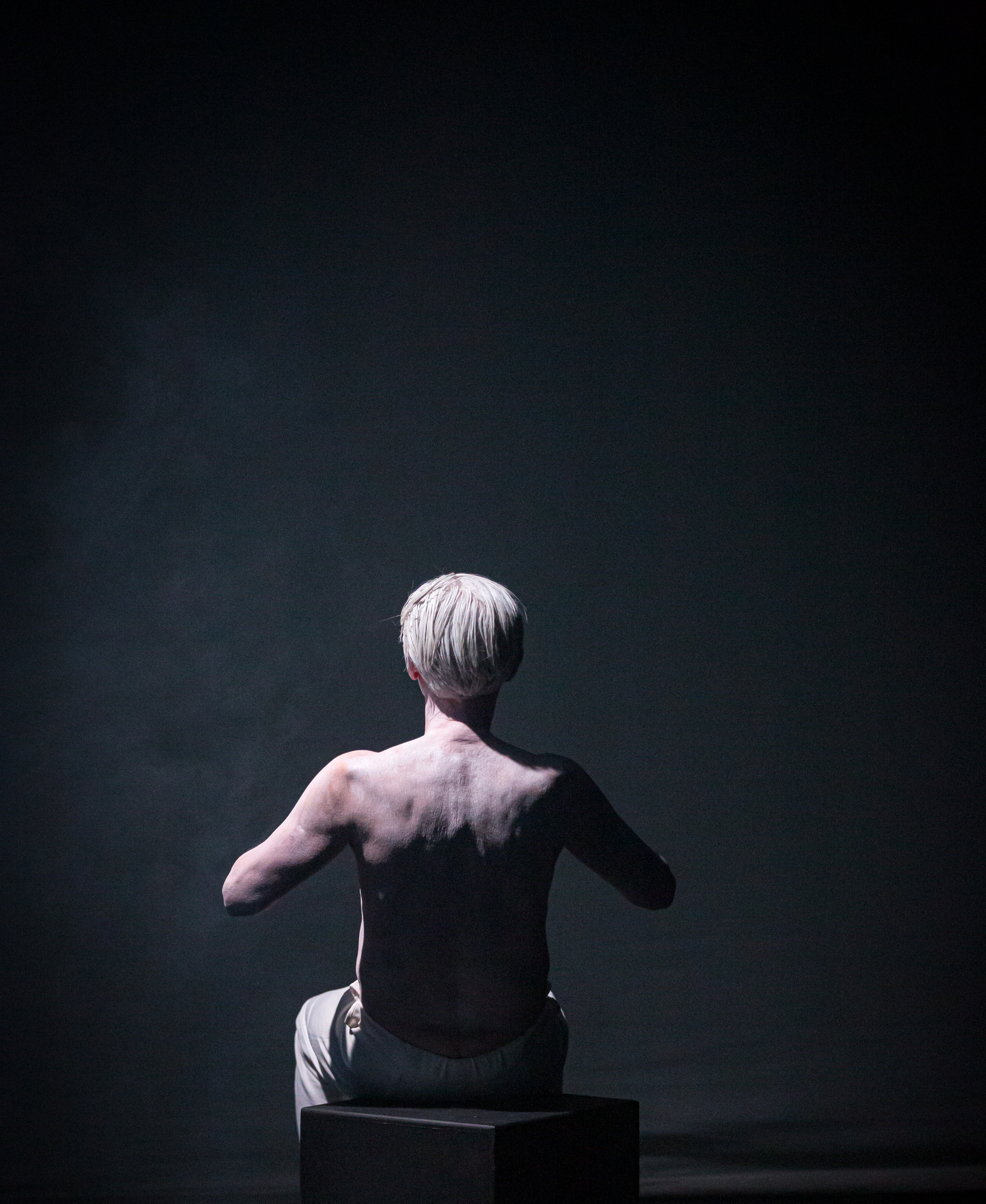
Páidín brings a different energy to the stage. From the start the more subdued lighting and swirling mist effects herald something ominous to come, with Mullarkey’s harsh, discordant score emphasising this impression. Páidín, played empathetically by Eoin O’Dubhghaill, is labouring for the Public Works although his heart is on the Atlantic Ocean looking out towards Aran. A terrible accident renders him blind in one eye but that is just the beginning of his troubles. As in Neill, a predilection for alcohol (in very large quantities) plays a large part in this character’s downfall, and we watch as Páidín’s life unravels. Despite the sombre tone, director James Riordan interjects some humour here as he did so effectively in Neill; the scene with Páidín and Maeve McGrath’s bar woman is funny and lightens the mood. The poignant living statue of Páidín, rowing his boat in a corner of the stage throughout the play, suggests an alternative life-story that challenges the physical and social reality of real-life Páidín.
Adaptation of Irish short stories such as O’Conaire’s for the stage brings a fresh perspective to the genre and to well-known stories often associated with school learning. Perhaps Neill works better as a theatrical piece than Páidín, with the latter’s subject-matter more challenging to stage but both are enjoyable and engaging. Brú Theatre and An Taibhdhearc have approached O’Conaire’s work with a delicate hand, keeping alive the music of his words in Irish while offsetting the dark themes with humour, deft acting and an intriguingly wonderful musical score.
As the performance is in the Irish language An Taibhdhearc are using a phone App which can be downloaded for closed captioning in English or Irish, meaning the plays are accessible to both Irish and English speakers.
Runs Until 10th May 2026.
