

Writer: Olga Annenko
Translator: Daria Moskvitina
Directors: Philip Parr (English), Nazarij Paniv (Ukrainian)
The York International Shakespeare Festival takes an unusual and daring approach: it treats Shakespeare not as a “domestic icon”, but as a “global citizen”. Thus the near-two-week festival, centred on York St John University, features productions from other countries alongside original approaches from Britain and places great emphasis on the fact that it is occurring in a University of Sanctuary in a City of Sanctuary.
Thus it is hardly surprising to find Ukraine featuring largely in this year’s programme, with exhibitions as well as productions. The climax of the Festival came in two afternoons on the final weekend with productions of Codename Othello in both English and Ukrainian (with English subtitles).
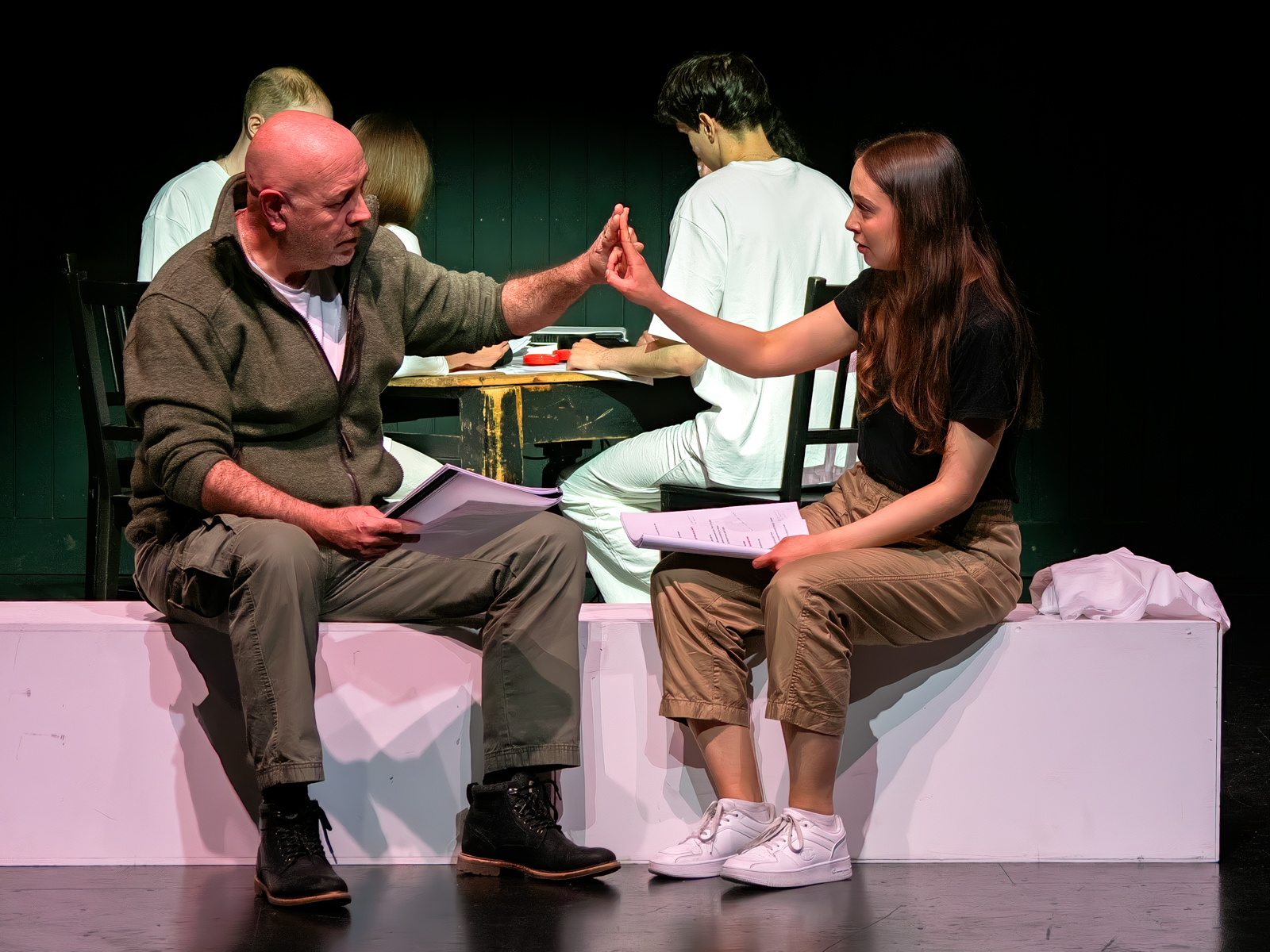
Olga Annenko’s work simplifies Othello down to three characters, Othello, Desdemona and Iago (with Emilia played by the same actor as Iago in the English version). The handkerchief appears, Iago does some rudimentary scheming, but the emphasis now is on the effect of constant war on all three characters, notably Othello, and the role of the military wife.
Daria Moskvitina’s translation has plenty of bite, but nothing to compare with the searing power of Nazarij Paniv’s Ukrainian version featuring actors of the Ivano-Frankivsk National Academic Drama Theatre: Maria Stopnyk, Ivan Blindar and Oleh Panas. Moskvitina’s text and Philip Parr’s direction seem at times a little fussy, with four silent white-clad figures poring over maps and plans and the Iago actor dressing up as Emilia and then playing it pretty straight, balding head, beard and all.
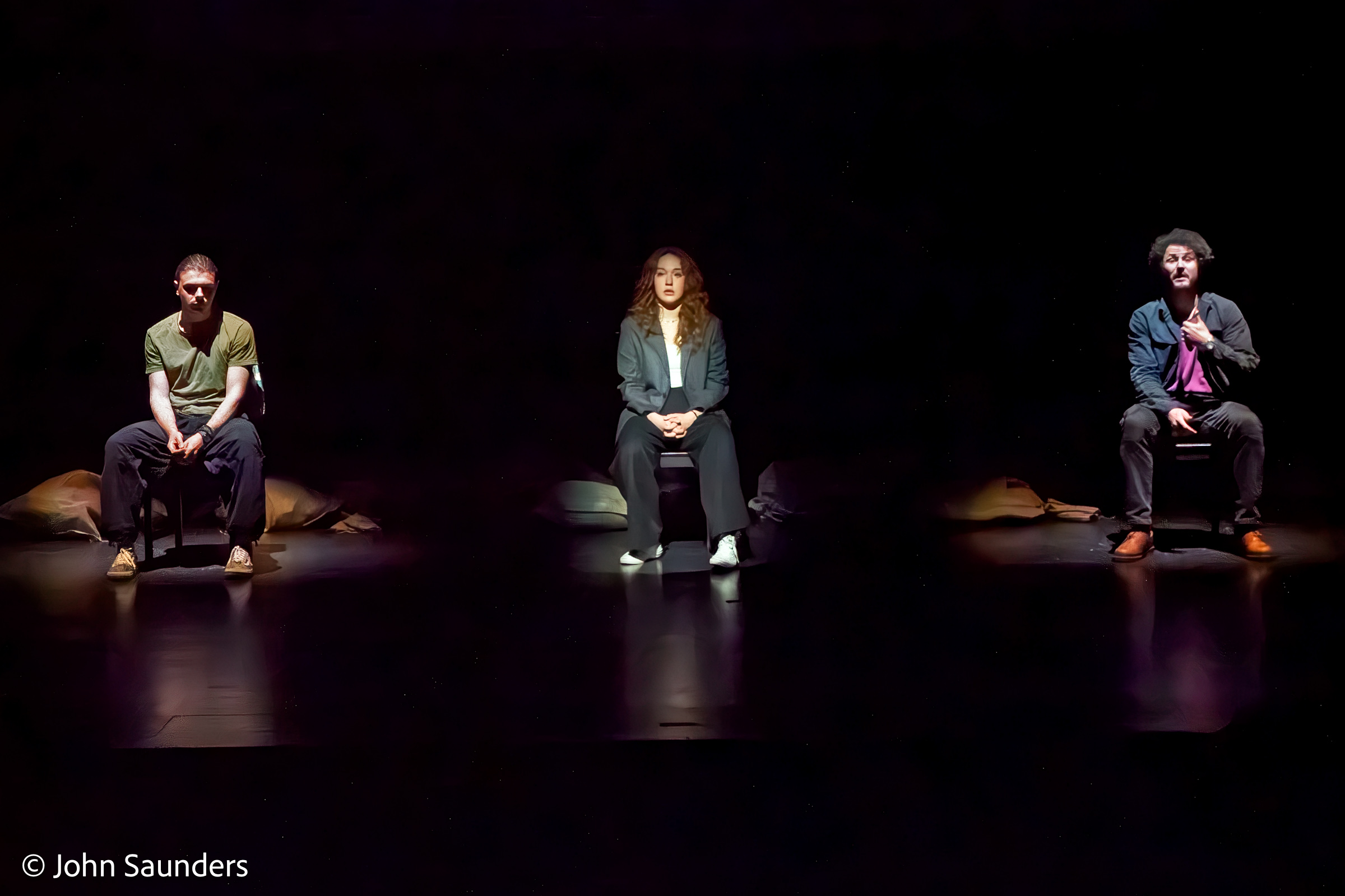
All three actors negotiate the mood swings from matter of fact to agonised skilfully, Desdemona’s shift from eagerly demanding details of battles to despairing of understanding her husband particularly disquieting. Eventually Othello strangles her, not because of Iago’s scheming (which he sees through), but in the aftermath of what he sees as treachery, discussion of a truce. There are occasional direct quotations from Shakespeare, but the result is very different, not just because of the references to Russia.
The departure from Shakespeare is even more obvious in the profoundly moving Ukrainian version: Desdemona, for instance, survives. This time, Othello and Iago are soldiers recovering from battle trauma, Desdemona is a psychologist working with them. The references to Russia become even more deeply entrenched in the plot, the patriotism that co-exists with trauma gradually surfaces until it becomes the dominant emotion. The scene where a Russian warship bombards the island while giving out messages demanding surrender, tensely underplayed in English, becomes a dramatic attack in Ukrainian, with the actors seeking shelter behind sandbags as shells explode around them.
Most powerful of all are the monologues delivered from downstage centre by each of the characters and the songs that echo the resilience of a people, sung with intense feeling, summing up the impact of the Ukrainian version of Codename Othello.
Reviewed on 3 May 2026
The Reviews Hub Star Rating
-
8
