

Composers: Duke Ellington and Terence Blanchard
Conductor: Daniela Candillari
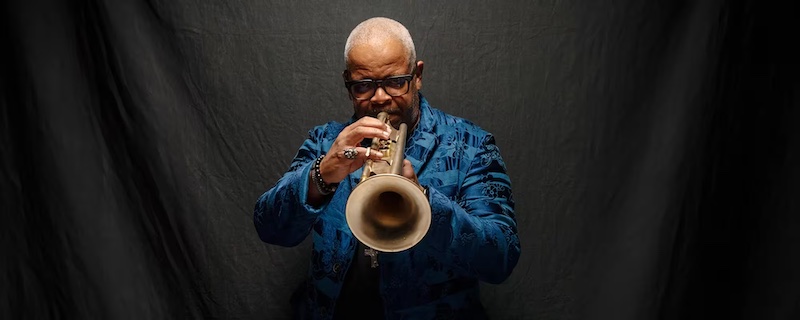
Trumpet: Terence Blanchard with The Terence Blanchard Quintet
Focused on the vital yet perilous relationships between people and wild waters, this stirring programme in the LPO’s Harmony with Nature series features works from two of America’s most revered composers: Duke Ellington and Terence Blanchard, the latter playing live with his Quintet.
In the pre-show talk, Gail Whiteman, head of Exeter University’s Nature and Climate Impact team, delivers a compelling set of climate change stats – “With each 1°C of warming the atmosphere can hold 7% more water vapour, intensifying floods… 1.5 billion people face life-changing risks” – before sitting down with Terence Blanchard, New Orleans born and bred, and eight times a Grammy-winner, to discuss the devastating effects of Hurricane Katrina, a Category 5 storm that in 2005 inundated 80% of the city, causing over 1,300 fatalities.
Blanchard was the natural choice to score Spike Lee’s epic When the Levees Broke, charting Katrina’s course and aftermath. The film includes footage of Blanchard and his mother, Wilhelmina, distraught at the destruction of their family home. They’d lived near Lake Pontchartrain behind New Orleans (also bounded by sea and swamp, and bisected by the Mississippi River), which was catastrophically breached by Katrina.
Here, Blanchard describes the injustices of the emergency response: certain neighbourhoods were neglected – people were left stranded on their roofs – and their displaced inhabitants labelled ‘refugees’, leaving them prone to avaricious developers. “Houses in the Lower Ninth Ward were inexpensive, but people owned them and paid their taxes.” Blanchard emphasises the importance of engagement – “Get involved and speak truth to power” – and the crucial roles of music and the performing arts as joyous, unifying forces that can educate the public and bring hope back to action.
The scene is set for Duke Ellington’s vivacious, devotional and thought-provoking River Suite. Doyen of the Big Band sound, Ellington (1899-1974), transcended genre categorisation in later life and originally composed this piece for Lucia Chase’s American Ballet Theatre in its 30th year (1970). Arranger Ron Collier astutely balanced its symphonic content with jazz, bop, swing, blues and film noir elements.
The suite portrays the cycle of life via episodic riverine metaphors, from bubbling source to convergence with the sea, or, as Ellington described it, “Heavenly anticipation of rebirth”.
Birth and gurgling babyhood are evoked by harp glissandi, warbling trumpet and trilling flute in Spring. Meander expresses exploration of the wider world, moving from wary strings to swaggering brass. The cartoonish, bop-influenced Giggling Rapids depicts the pursuit of competing distractions with confident brass, chiming percussion and strings careening around like a kid on a bike. Then there’s the romantic serenity of Lake, lush and Latin-infused, with lilting strings, shimmering, brush-stroked cymbals and a resonant dialogue between cello and oboe.
Fast and furious, Vortex celebrates diving into the dangerous whirlpool of existence and experiencing its hazards. Rapid drum beats, impressive timpani glissandi, tooting trumpets and queasily cornering strings render it appropriately hectic. Plummeting fortunes are suggested in Falls: steeply cascading harp runs, jagged brass and alarm-sounding trumpets. Village of the Virgins (Twin Cities) is mystical and distant, like a lady in an Arthurian castle, with mournful oboes, sentimental strings and muted horns. Finally, Riba, life’s chaotic but powerful mainstream, is very filmic, with slick and sassy swing, driving drums and an upbeat finish.
River Suite is a riotous ride, steered here to perfection by internationally-experienced conductor Daniela Candillari, supremely confident in her LPO debut. She coordinates the orchestra-wide syncopation with precision, while keeping the swing easy and natural.
Terence Blanchard then takes centre stage with his quintet to present A Tale of God’s Will: A Requiem for Katrina (its first UK performance), developed from his score for When the Levees Broke with five trusted collaborators. The emotional range of this narrative anthology is profound: bold, despairing, elegiac, triumphant.
The audience enthusiastically complies with Blanchard’s request to join in with vocals for the opening Ghost of Congo Square, celebrating a locale where the beat of African drums transformed into jazz. The persistent lyric is couched in sharp, catchy percussion, deep plucked double bass and dynamic trumpet. It’s a striking contrast to Levees with its swirling, sinister strings and crashing cymbals evoking rising waters pummelling inadequate flood defences, and rapidly-ascending, siren-blaring trumpet.
Bruce Winston’s discursive In Time of Need depicts the anguish of displacement and abandonment. Blanchard sings a plaintive, wordless vocal against syncopated drums and contemplative piano, followed by troubled interplay between wailing sax and pleading trumpet, rising to a rebuke and a howl of despair.
As a break from the intense emotion, Blanchard introduces his five players and praises the LPO (“From the first note of rehearsal I was just blown away”) before proceeding to Kendrick Scott’s uplifting Mantra, which presents a city roaring back to glory and showcases the Quintet. There’s gymnastic bass from David Ginyard, Tal Cohen’s fluid and virtuosic piano solo, energetic yet controlled drumming from Oscar Seaton, stylish, sustained sax by Ben Wendel and mellow, freeform guitar from Charles Altura. Blanchard’s trumpet soars and shrieks before swooping down to a peaceful conclusion. Life goes on!
After the wistful, cathartic Over There – “To appreciate what’s in front of us” – and slow, deliberate, swaying march of Funeral Dirge (for those who never made it through the storm), Blanchard ends this intensely heartfelt performance with Dear Mom, paying tribute to his mother’s bravery and honesty as she confronted the ruination of her home. His wistful trumpeting achieves sobbing intensity.
A lengthy standing ovation sees the audience appreciating this emotionally wringing, bravura performance from merged ensembles that deliver with consummate fluency and grace.
It’s a rare privilege to experience music of such high quality and historical significance manifested by its creator in person. This exceptional, informative programme does much to raise both spirits and awareness.
Reviewed on 17 April 2026
