

Writers: Nuria Dunjó, Sara Fantova and Nuria Martín Esteban
Director: Sara Fantova
A summer fling at the Bilbao fiesta is the backdrop for Sara Fantova’s new film Jone, Sometimes co-written by Nuria Dunjó, Sara Fantova and Nuria Martín Esteban, screening at BFI Flare 2026, but at its heart is the story of Jone who, along with her father, must learn to accept his early on-set Parkinson’s Disease while taking care of her younger pre-teen sister. With a strong Andrea Arnold influence in particular in its focus on a young working-class woman forced to act beyond her years, Fantova’s film puts her struggle at the centre of the story as she tries to mesh the demands of being an ordinary young adult with a worsening of her father’s condition.
While Jone takes care of her father, Aita and sister Marta, cooking, driving and fixing any problems that arise, Aita refuses to accept there are some basic things he can no longer do. While hanging out with friends, Jone meets Olga, working the bars at the fiesta and they begin a brief romance, although their age gap and Jone’s unspoken home troubles come between them as she refuses to accept she needs help.
Fantova’s film is small and subtle in all the rights ways, a contained piece that never loses the protagonist’s point of view and the complex emotional range brought to life by actor Olaia Aguayo who holds the intimacy of the film with skill. The titles references the dual life the character is forced to lead, sometimes able to be herself with friends, drinking and having ordinary love affairs during the evenings, activities she must shut down when family and duty call, something she adopts uncomplainingly, never telling anyone else what is happening at home and, by extension, not letting anyone in – the driver of the film.
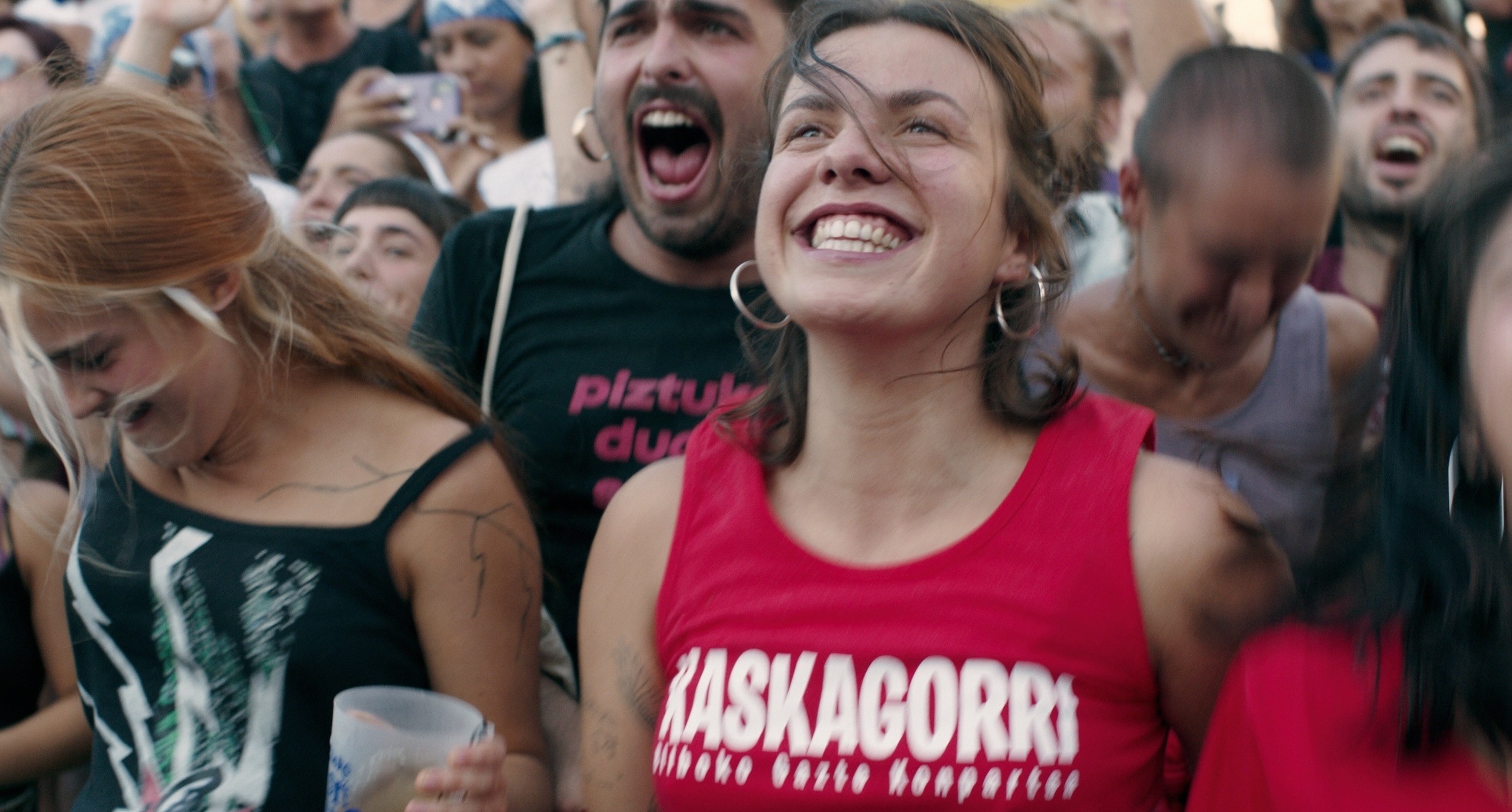
Fantova creates the scenario well and the two halves of Jone, Sometimes provide a meaningful complement to one another. There is more than a little Arnold in the working-class family experience, the pressure on young women and the urban world in which they exist, yet like Arnold these are treated with dignity and emotional range, meaningful and valuable lives however small. By contrast, the fiesta scenes are filled with verve and energy, immersive festival crowds, dancing, drinking and enjoying the freedom of the city’s nightscape, the celebration of Bilbao and the fireworks that bring hope – much like Molly Manning Walker’s How to Have Sex, a vibrant, particular moment when being young is all that matters.
Aguayo gives a strong central performance as someone trying to manage and give nothing away. Jone, as a result, is not always likeable, she does and says the wrong thing, pushing others away but her essential goodness is hugely watchable, part of a journey of self-acceptance that takes her through the film and towards a better understanding of her father’s condition. Young Marta is adorable, a scene stealer whose affection for her sister is lovely and the small family moments are the basis of Jone, Sometimes.
It is important to see films where the characters’ sexuality is just accepted fact by her friends rather than another challenge, and you hope by the end that this sometime Jone will be able to put all her fragments together one day.
BFI Flare 2026 runs from 18-29 March.
