

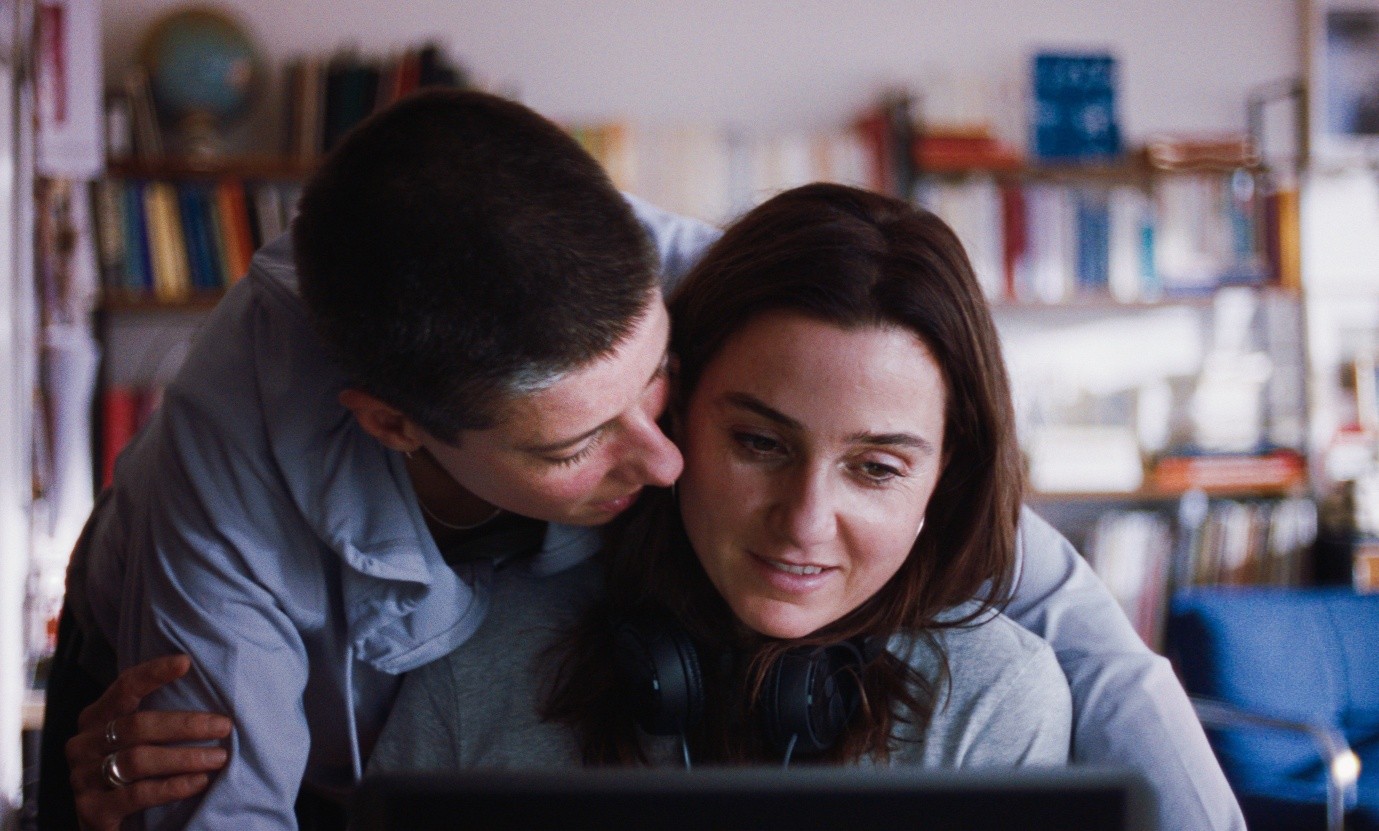
Writers: Angelo Tijssens and Cato Kusters
Director: Cato Kusters
Based on the memoir by Fleur Pierets, Julian charts the attempt by two Belgian women to marry in each of the countries where same-sex marriage is legal. In the year 2017, when this film begins, the number of countries which permitted such marriages was 22. Fleur and Julian’s challenge was called Project 22.
But when Cato Kusters’ film flashes forward to 2019, it’s clear that something has happened to Julian. Fleur is alone as she prepares for a talk in New York, and there’s blurry footage on Fleur’s laptop of her wife lying in what seems to be a hospital bed. The rest of the film switches between two time periods: arranging the weddings in 2017 and then getting ready for an even more solemn ritual in 2018.
As the film’s main focus is on the relationship between the two women, there are only a few direct references to their endeavour to publicly embarrass those countries where same-sex marriage is prohibited: Italy and Greece are namechecked more than once. In one sparkling scene, we see Fleur try to convince her magazine boss that they should run the story and give her two years off work while she jet-sets around the world marrying Julian and finding sponsors to finance the journeys. More examination of the logistics of Project 22 would have acted as a welcome balance to the tragic story to come. Julian’s decline is heartbreaking, but it’s a familiar plot in movies.
What raises Kusters’ debut from films like it is the quality of the performances by the two leads. Nina Meurisse gives Fleur a steely determination and is so intent on her project that she occasionally seems to forget the more personal reasons for such a series of weddings. When they reach the Big Apple for a ‘New York minute’ wedding, she just wants to get to the hotel and her laptop. Julian has to beg her to take some time out and enjoy the city as tourists for an afternoon.
Laurence Roothooft’s Julian is the more laid-back of the couple. Quiet, almost shy, Julian awkwardly performs a dance for Fleur’s camera as the latter documents the weddings for her project. Roothooft’s character remains elusive and private, almost as if she’s already missing, and this creates a loss that endures throughout the whole of Kusters’ unfussy film.
Like in Sarah Waters’ lesbian Blitz novel The Night Watch, Kusters chooses to end her film at the beginning, and the effect is poignantly bittersweet.
BFI Flare runs from 18-29 March.
