

Writers: Grzegorz Puda and Maciej Sobieszczanksi
Director: Maciej Sobieszczanksi
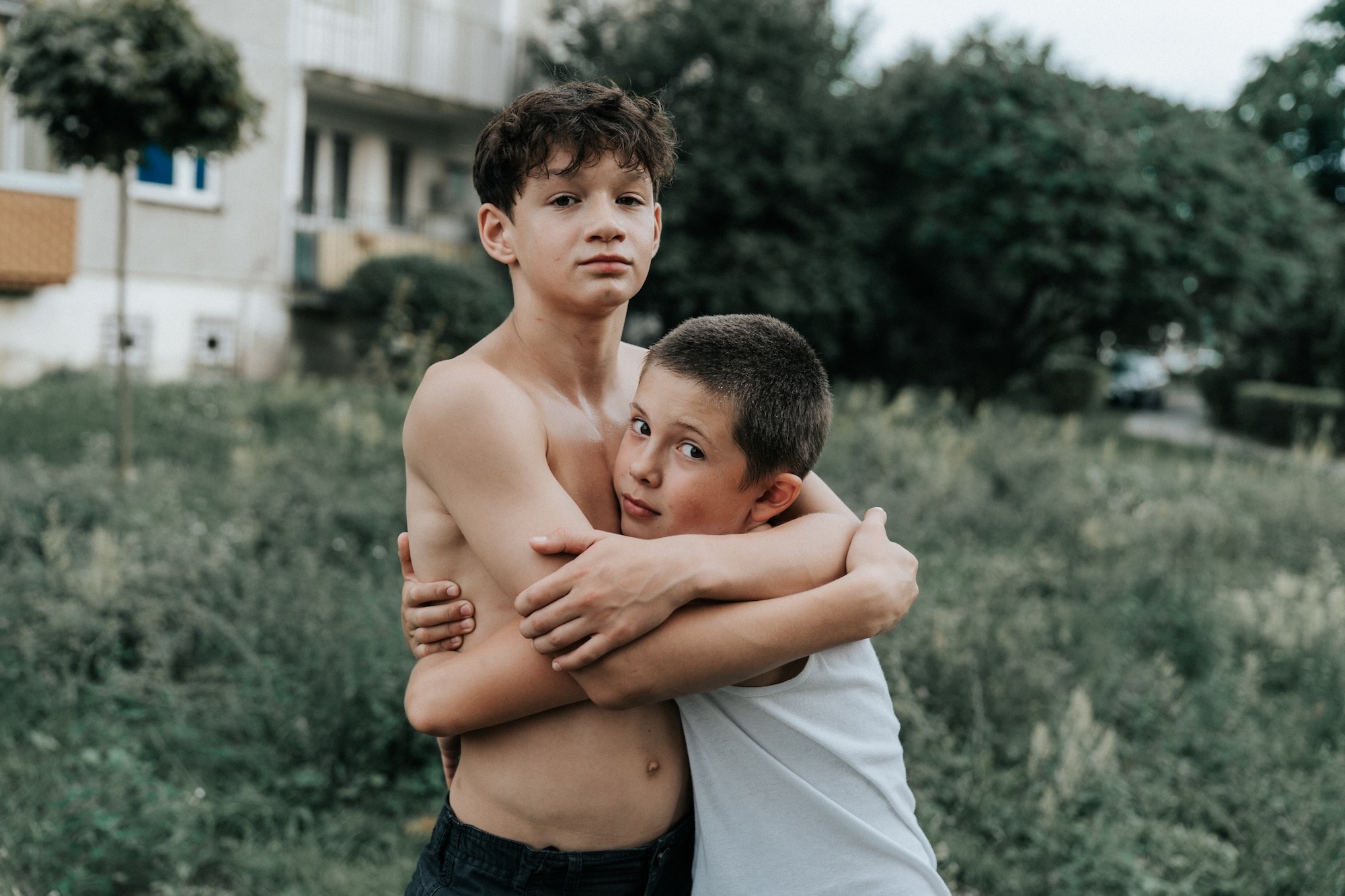
Closing this year’s impressive Kinoteka Polish Film Festival is Brother, Maciej Sobieszczanski’s colourful slice of social realism. With a striking palette of bright blues, reds and swashes of yellow, this tale of two brothers dealing with their father’s imprisonment grips like a vice and is helped enormously by the strong performances of the film’s two young leads.
Dawid is no longer allowed to go and visit his father in jail, so instead he shouts to him over the prison walls before school. Dawid is 14, a promising Judo player, but is struggling in his other classes. He has to look after his younger brother, Michał, who seems to have a bad case of kleptomania. It’s up to Dawid to keep the peace between his family and the neighbours. He’s also responsible for making sure Michał learns his Catechism for his Holy First Communion, which is fast approaching. When reciting the Ten Commandments, the instruction not to commit adultery comes like an augury.
Their mother (a compelling Agnieszka Grochowska), a nurse at the local hospital, will soon embark on a relationship with Dawid’s Judo coach, a much-needed father figure for the elder brother, but an imposter for nine-year-old Michał, who still wets the bed occasionally. Matters come to a head when Dawid has the opportunity to attend a residential sports school in Gdansk, some distance from his home town.
It may sound grim, and it is, but Sobieszczanski saturates his film with vivid hues, from the family’s yellow kitchen wall to the red Judo mats on which Dawid wins his bouts. Carefully positioned red-topped milk bottles on the kitchen table and an abandoned yellow ball in the playground ensure that each scene pops with vibrancy. Even the ice creams in their multicoloured cones, which the boys eat with their uncle, appear to be judiciously selected for their tones.
For most of the time, Sobieszczanski keeps the camera level with the brothers’ heads to ensure that we navigate their world as they do. However, at other times the camera soars above them, most strikingly when we watch Dawid on the mat at a competition. The film is also punctuated by blackouts, a feature that Sobieszczanski’s fellow Polish director Damian Kocur used so effectively in his debut, Bread and Salt. These strategies lift the film out of gloomy Ken Loach territory, while the colour scheme is reminiscent of Charlotte Regan’s Scrapper, which also deals with absent parents.
But it is the performance of Filip Wilkomirski as Dawid that makes this film so powerful. He doesn’t flinch even when the camera must be inches away from his face while emotions such as rage and ideas around duty simmer in his eyes. These feelings are only obvious when he invigoratingly slaps himself around the cheeks as he walks to meet his next opponent on the mat or when he despairs of his brother’s betrayal. Tytus Szymczuk as Michał acts as if the camera isn’t there at all, catastrophically so by the end.
Brother screens at Kinoteka Polish Film Festival on 29 March.
