

Writer: Annie Power
Director: Penny Gkritzapi
Suspenseful, spine-chilling and affecting, with impressive characterisation, this monologue anthology from award-winning screenwriter and playwright Annie Power details the struggles of four women caught in webs of deceit and trauma. As they grapple with their extremely challenging situations, each protagonist becomes imperilled as they reveal long-hidden secrets that trigger defensive and dangerous responses.
In the first piece, All That Remains, Niamh O’Donnell plays Poppy, about to embark on a fight for survival in the midst of a hurricane-strength storm lashing her remote Highlands location. Dressed in a homespun smock and using her soft Scottish accent to soothing effect, O’Donnell transfixes as she traverses from the quiet intimacy of family life: little brother Caleb is bravely battling cancer; Mum and Dad are attempting to provide comforting, joshing normalcy to the extremities of physical tolerance imposed by the maelstrom and ensuing flood.
Skilfully lit by lightning flashes and occasionally plunged into darkness, O’Donnell uses the entire stage to evoke the hazards of her journey with expressive agility. “Stripped of everything familiar”, her emotions are raw: she twists her fingers, clutches at her stomach – in the absence of anything else to cling on to – and cries real tears that course down her face. Having achieved salvation courtesy of local worthies and elders, and won the audience over, Poppy perhaps too blithely and suddenly moves into sinister folkloric territory. “We’ve turned our backs on the old ways, and this is our punishment… Mother Nature reminds us of our disloyalty.” The denouement is slightly predictable, but still stomach-churningly impactful and unsettling.
The second study, Faulty, focuses on footy mad 16-year-old motormouth Lily, played by George Bird with convincing energy, innocence and lanky physicality. Apparently well-balanced and happy, Lily’s life spirals into catastrophe after a chance comment at school provokes closer examination of her lop-sidedly cohesive family: she only gets on with her brother and Dad, while her mother openly expresses “unmasked loathing” towards her. This is the shortest of the monologues, and the least densely plotted, but it forces the audience to confront the almost unimaginable consequences of a savage societal occurrence that’s rarely aired.
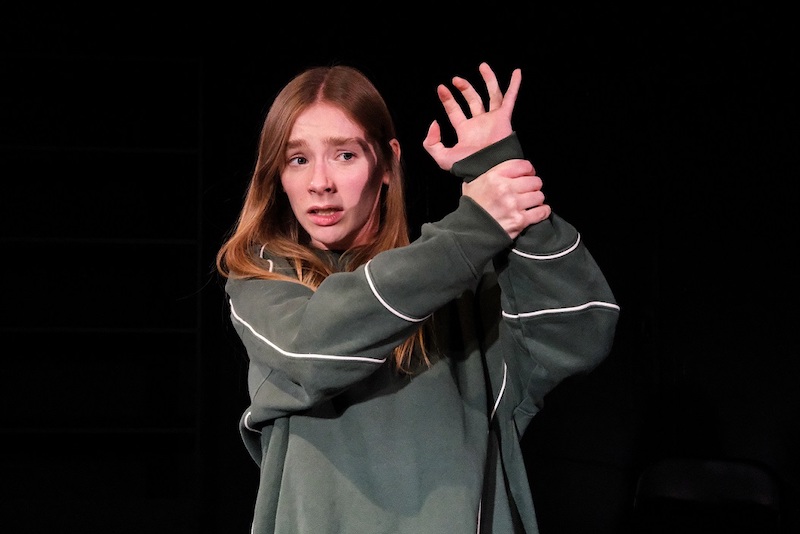
In The Prophecy, Harriet Main is pale, quiet detective Rose, left distraught by a series of child murders in her precinct. The hand-wringing intensity of her obsession is palpable, and the audience is cleverly drawn into her hypotheses around the killer’s identity, which appear logical and reasonable until revelations around Rose’s own upbringing cast them into bewildering doubt. “Poor Rose: no one will believe you.”
Main’s experience as a roleplay actor for the police must have been invaluable as a source of inspiration for her highly credible performance as an unravelling detective forced to confront her own failings and tangled history. The ending here strays perhaps a little too far into the realms of fantasy and horror, but lacks nothing in pace and vivid drama.
The final monologue, Threshold, sees the bright, beaming and engaging Finella Waddilove play Bella, a mother in a small Suffolk village who takes it upon herself to laud her fellow villagers, gathered at a parochial meeting, for their community spirit and congeniality: Geoff with his yoga classes, Linda with her watercolour tuition. It transpires that Bella’s friendliness masks a frantic anger: no one seems prepared to step forward with evidence to explain the disappearance of her level-headed five-year-old daughter – “She knew to scream” – after Bella lost sight of her happily dancing around the garden. “Every awful possibility thundered through my head like a freight train… all you gave me was stilted conversations and awkward looks…you know who did it.” Convincing as a good neighbour and stern adjudicator, Waddilove could display a little more deranged grief as a bereft parent, although perhaps the point is that Bella is now incapable of expressing any emotion whatsoever.
All the pieces stress-test their protagonists beyond rationality and demonstrate the ease with which people devise interior narratives to justify their errant and appalling behaviours. The tense, heavy onstage atmospheres are accentuated by Constance Comparot’s petal-strewn set, suggesting the complete devastation of tender flowers, while Amy Horsley’s sound and lighting lend appropriately emotive colour. The noises emanating from Upper Street – squad car sirens, bursts of music – are also usefully synchronous with the action.
Perhaps the most impressive aspect of the writing – taut and evocative throughout – is the way in which Annie Power has managed to craft four satisfying story arcs and endings within the confines of a 70-minute show.
Coinciding with International Women’s Day, this all-female production showcases the skills of four superb young actors, celebrates the astonishing depth and nuance of female insight and unflinchingly dwells on the darker aspects of the feminine psyche. Powerful and at times genuinely shocking, Death Belles delivers a bracing, unnerving and energising experience.
Runs until 9 March 2026
