

Writer: Tanieth Kerr
Director: Katy Livsey
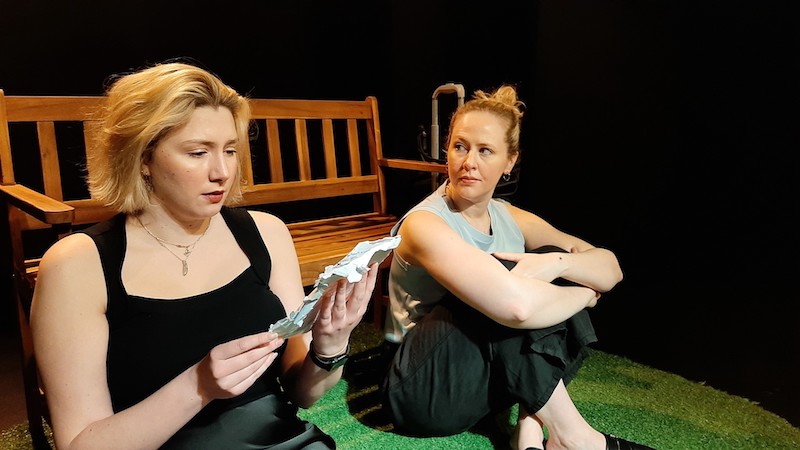
After the funeral of a cruel and domineering mother, her two daughters, who have not communicated with each other for several years, sit on a bench and talk.
That’s the kernel of Tanieth Kerr’s single-act play. Younger sister Ally (Beth Birss) was 14 when her elder sibling, Rachel Jones’s Makayla, left for university – no small feat of independence, given that their mother tried to destroy her UCAS paperwork in an attempt to stop her departure. Now, a lifetime later, Makayla has returned but could not face attending the ceremony, and has been out of Ally’s life for so long that she is unaware of the job her sister has held for over six years.
After a short prologue showing the girls in one of their last happy days together, director Katy Livsey keeps the attention on the tensions of the present. What the play captures well is the awkwardness and the silent expressions of mutual resentment that simmer between the sisters, even as they look out for each other. Both Birss and Jones can immediately sell the sibling relationship, displaying flashes of emotional connection even when they are at their most prickly with each other.
Some of the beats feel less original, such as when Makayla reveals that she is engaged to ‘Alex’, only to reveal that Alex is not a man but a woman. Some are both character-led but convenient for plot: in an age where we all reveal too much of ourselves online, Ally’s complete ignorance of her older sister’s life is because Makayla never accepted her Instagram friend request, for example.
There is also the question of the mother, presented by turns as domineering and controlling, then distant and uninvolved. Without a physical presence with which to connect, Kerr’s writing often presents contradictory views of the matriarch: intended to grapple with the complexities of a mercurial character, maybe, but preventing us from ever really feeling the pain tied to duty that the sisters feel.
Also not helping matters are some of the longer speeches Kerr gives her characters. When Birss and Jones are in conversational mode, their characters feel realistic and relatable, but monologues – especially Birss’s recounting of the ceremony Makayla missed – feel more like authorial short stories than part of the onstage characters’ voices.
Still, the impression of how the sisters interact with each other shines through the awkwardness and occasionally stilted dialogue. What I’d Be ends with a Beach Boys song. “God only knows what I’d be without you,” the principal lyric says: for all their ups and downs, these sisters wouldn’t be who they are without their mother, or each other.
Runs until 21 February 2026
