

Directors: Ian Forsyth and Jane Pollard
Marianne Faithfull was both an enigma and an icon. A key member of the 60s music scene, and later known for her resilience and recovery from heroin addiction, Faithfull is seen here in the final days of her life – she died during production – and although there is a framing device of some ministry interrogation into her memories, the conceit is really not needed.
She is a brilliant, honest, and disparaging interviewee. Broken English – named after her seminal album of 1979 – somehow feels that is not enough, instead supplementing our view of the woman herself, now and then, with Tilda Swinton as an overseeing controller, and performances of songs that are very different from Faithfull’s interpretation.
Seeing Faithfull’s smile as she sees herself sixty years earlier singing with Joan Baez, reflecting on her friendship with Allen Ginsburg, and reuniting, sweetly and briefly, with her first husband John Dunbar, is worth any recreation or clutter of the ‘Ministry of Not Forgetting’. But in a way, Forsyth and Pollard’s documentary delves deep into a life full of contradictions and confusion.
Broken English is part personal exhibition, part reflection on the life of a creative and free soul who grew up in a commune and a convent, engaging with everything physical, mental, and emotional that was offered to her. Only Twiggy has a similar resonance from 60s Britain, and the two couldn’t be more different in their approach and image.
A staged debate roundtable with modern women in the media, chaired by Edith Bowman, is not without interest, but the sense of ‘Marianne Faithfull is right there,’ and the time-wasting is strong. Still, if Faithfull herself refuses to discuss the drugs raid that perhaps defined her public image, what can be done?
The fact that this dynamic force of nature is no longer with us makes Broken English an emotional watch, not simply because of the realities of illness and infirmity, but because of the imbalance of what women were expected and allowed to do in an era that appeared to be liberating but instead had a long way to go. Misogyny really was a reality.
Faithfull’s language is earthy, vibrant, and direct. Archive clips show a biting intelligence from an early age, and perhaps a thrill of exploring the darker side of life – although, when she is asked in the film whether an artist needs darkness to thrive, her response is a blunt ‘f**k, no!’
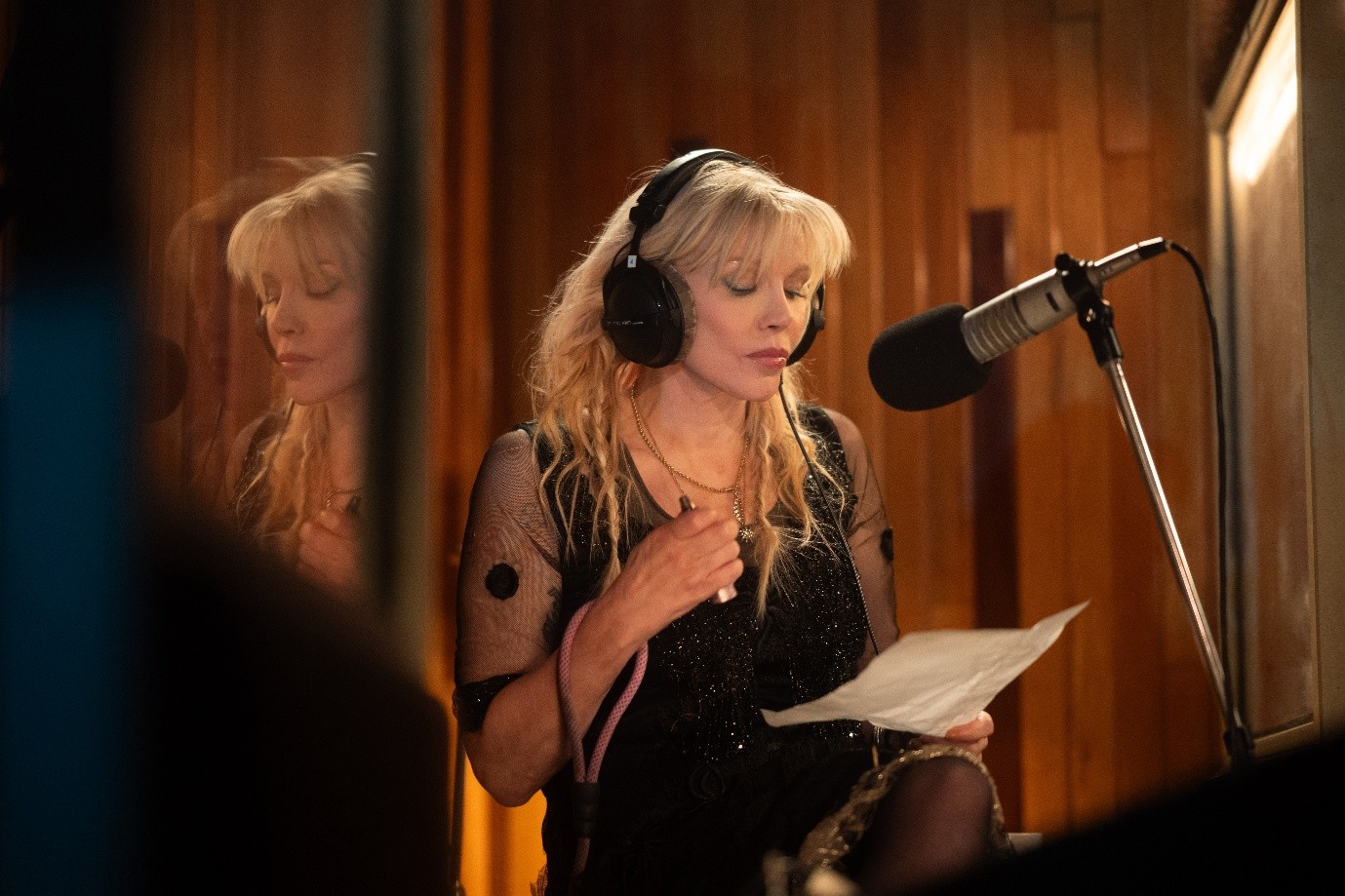
As Forsyth and Pollard had to create the final cut of this film after Faithfull’s death, it is more memorial project than a celebration of life, although it does include her final musical performance alongside Nick Cave and Warren Ellis. It glows with the persona of its subject without being overly reverential. Without being perfect, which is right.
Broken English is in UK & Irish Cinemas on 20 March.
