

Writer and Director: Julia Jackman
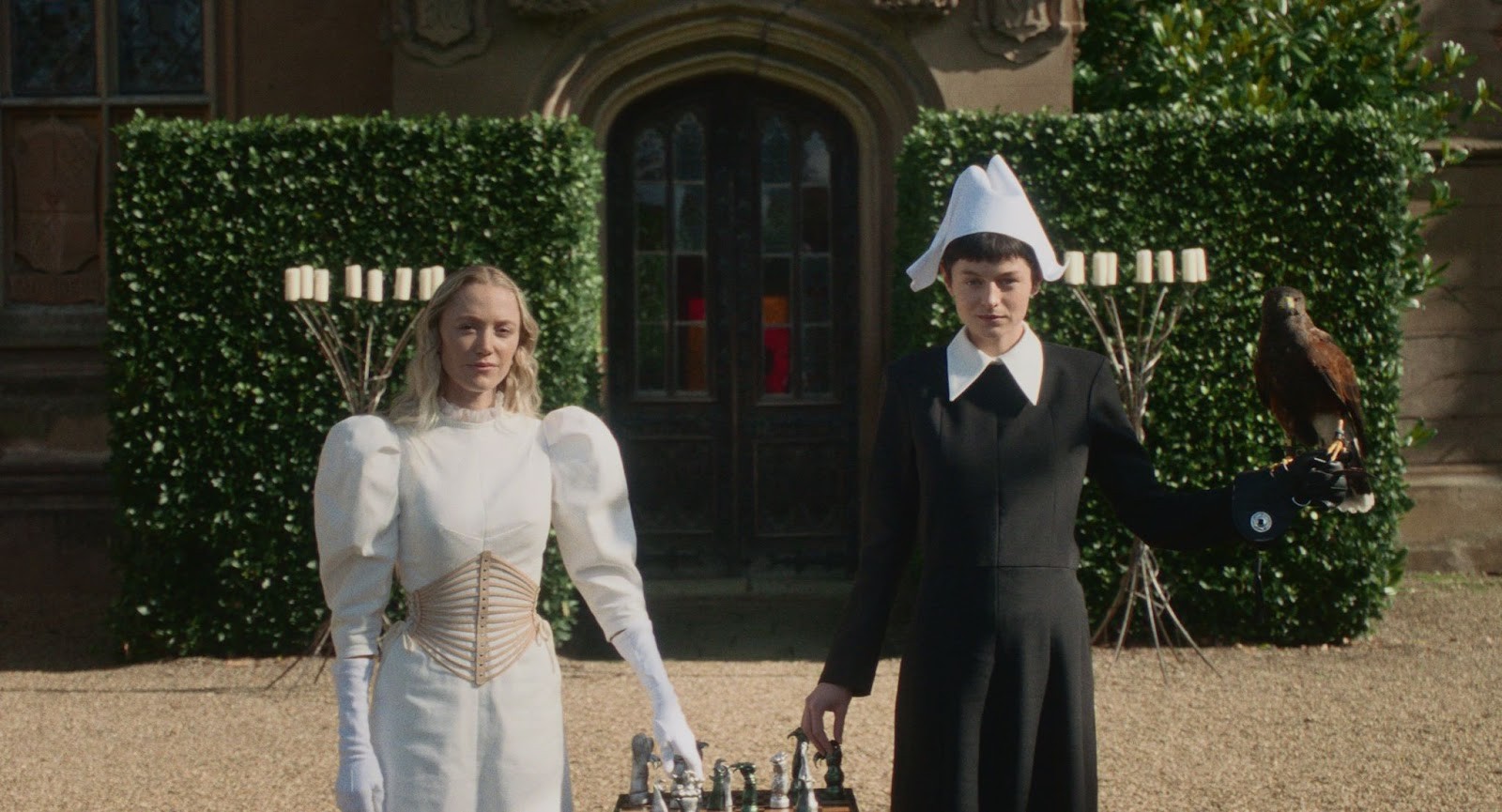
Julia Jackman returns to the BFI London Film Festival to present the Closing Night film, the 90-minute reflection on patriarchy set in a fairy tale land, 100 Nights of Hero. A film with lots of interesting influences from British period movies, fantasy and 60s anarchic drama, Jackson sets up an interesting tale and plenty of avenues for character development built around the concept of storytelling both as a dangerous activity and a protective tactic as well as inspiring women to greatness. But once it reaches its denouement, the film makes less sense of all these strands and gets sidetracked by its secondary subplot.
Cherry is married to lord of the manor Jerome who has lied to the local religious leaders about their failure to consummate the nuptials. With no heir in sight – a woman’s only purpose after all – the couple are given 100 nights to rectify the situation. But Jerome leaves the task to his handsome friend Manfred who strikes a bargain with Jerome that he can seduce Cherry in that time, only Cherry’s maid Hero has other ideas.
The first three-quarters of Jackson’s film is both strong and engaging, setting up a loaded fairy story with a knowing air that outlines the subjugation of women and the dangerous notion of storytelling quite effectively. Here, the classic tropes are deployed satirically to make clear points about the lack of worldliness propagated for women told through a princess and maid character whose duties are to serve evil barons and handsome princes who seem good but actually reinforce the limitations pressed on female characters while enjoying the freedoms that the patriarchy offers to them alone. Within this, Jackson has Hope tell a particularly incendiary story about rebel women educating themselves enough to see beyond their shackles but must play men’s games to survive.
Yet, problems arise in trying to conclude the film and Jackson digresses into a same sex relationship that never rings true – why can no one just be friends in films with the complications of romance? – and a series of sacrificial endings that are supposed to seem glorious and noble but only mean defeat. A hasty addendum suggests the storytelling is the important part, allowing inspiration and resistance to form, yet the notion feels glib when neither female character is truly empowered by their knowledge, men still determine what happens to them and Cherry in particular is just as insipid and led by another at the end of the film as she was in her marriage without the equality that seemed possible in this approach.
Emma Corrin is excellent as ever in the leading role, a cautious and resourceful Hero who lives up to her name. Maika Monroe develops a fluttery chemistry with Nicholas Galitzine’s ridiculous Manfred who certainly ups the charm and there is plenty to enjoy in Sofia Sacomani’s production design and particularly Susie Coulthard’s fairytale meets dystopian nightmare costumes. Yet 100 Nights of Hero could say much more about the power of a story and the world that a new tale can create.
100 Nights of Hero is screening at the BFI London Film Festival 2025 from 8-19 October.
