

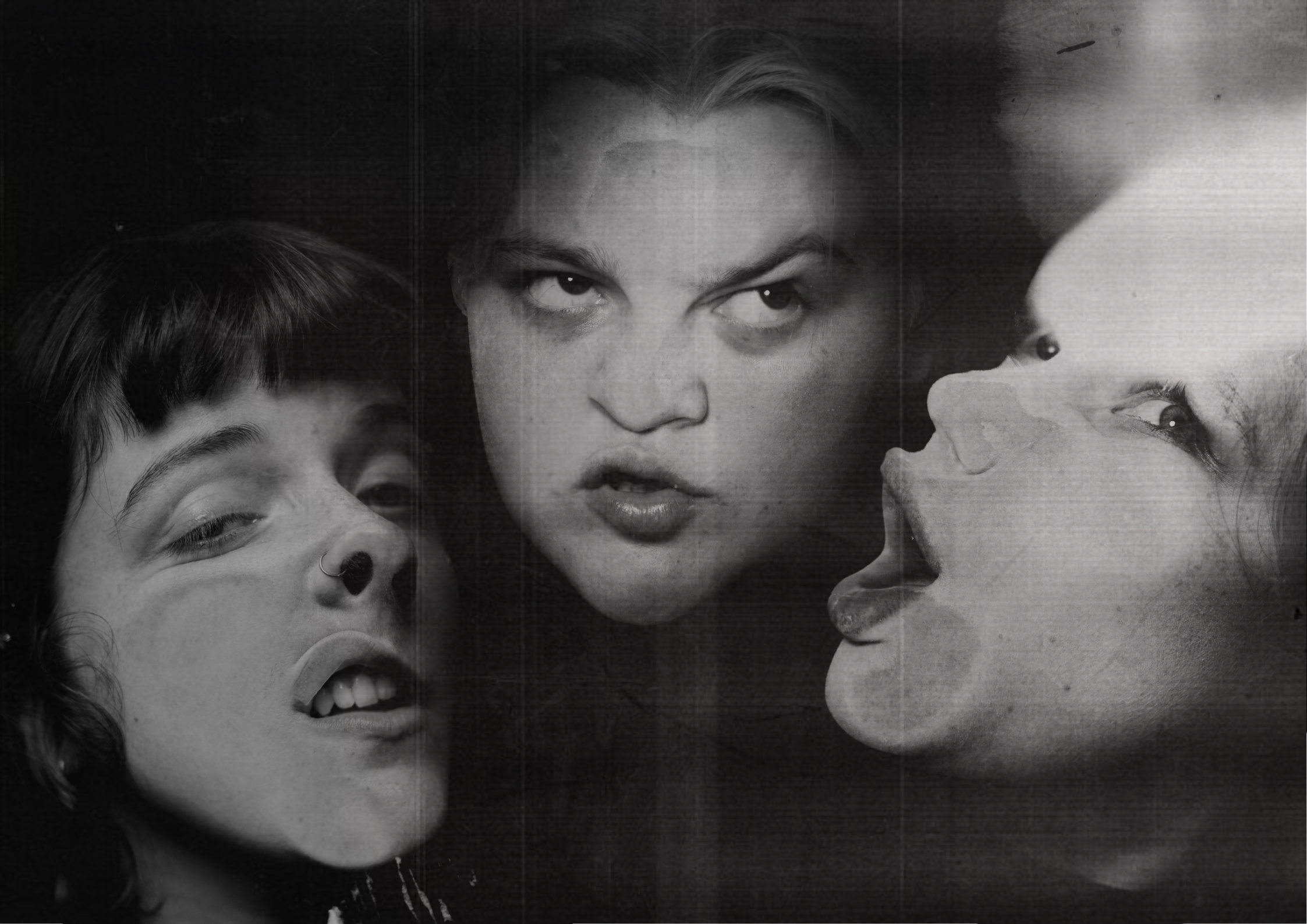
Writers: Doris de Vries & Signe Lury
Director: Doris de Vries
As you enter the Patrick Sutton Studios at Smock Alley for don’t copy me (copy) Signe Lury, Faith Jones, and Anna Winifred are onstage mooching, chatting with each other, and interacting with audience members. This is either a genuine aloofness, or part of the show – the immersion is the goal, we should feel like we are in their theatre company’s office, and the ripped leather couch and plant pot on a stack of books certainly creates that ambience. The problems, though, begin when this aloofness needs to be disrupted, and the show commences. At this point it’s hard to not see the casualness as sloppiness, and the interactions with audience members as chit-chat with friends. These problems continue throughout the work, which is either undercooked, or simply not as engaging a take as its creators want it to be.
Jones has the first lines of the play, detailing the story of the 1988 production of Waiting for Godot in the Netherlands that prompted Beckett and his management to devise new conditions for producing his plays that severely restricted the ability to interpret them or alter their lines. This a promising start; we’re going to hear a new perspective on the artist’s relationship with their work – as Jones points out, playwrights are in a unique position with regards to copyright, as their work must always be created anew.
The piece then turns to Lury, Jones, and Winifred playing versions of themselves, and this is where it suffers. They discuss which play they should produce for their environmentally conscious theatre company, and so begins an interminable conversation littered with references to writers, plays, and titbits of theatre history. This is all doused with buzzwords and slogans around capitalism, gender, class, and race, but never goes beyond the surface to investigate these topics. Anyone who has been in a university classroom (or the internet) will recognise these talking points, and be largely bored by what is said.
I hope that Gift Horse Theatre can overcome these limitations, and become a company that truly says and does original things; environmentally conscious theatre is of course something that is needed drastically. Their final segment was also encouraging, as they ape Beckett’s Play, with each actor standing at lecterns, reciting parts of a story when their face is illuminated. They tell the story of Beckett’s marriage and affair, and it’s the only moment that doesn’t feel like it’s trying too hard, ironically by copying the hegemonic straight white male playwright of the twentieth century.
Runs Until 20th Sept 2025.
