

Writer: Johnny McKnight
Director: John Tiffany
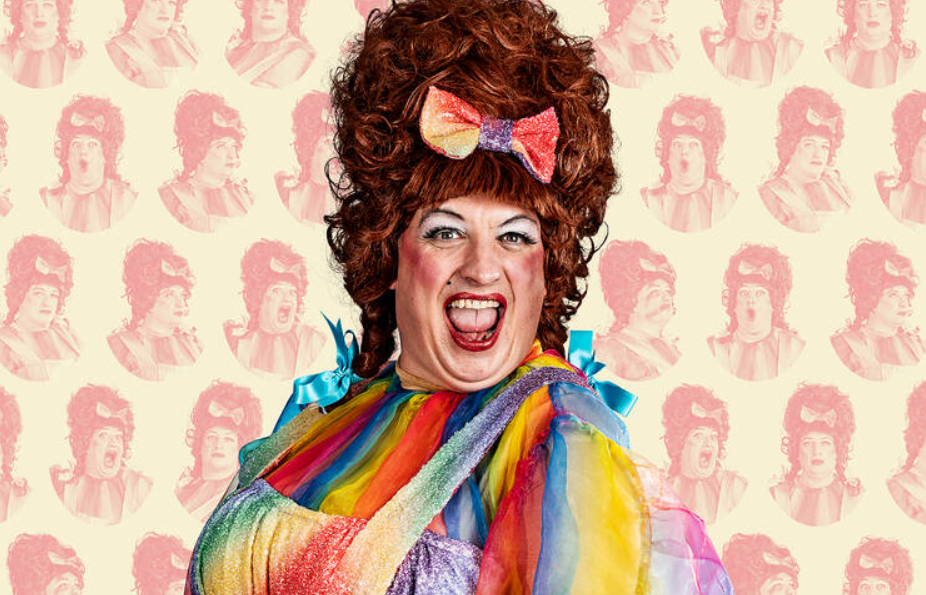
Of all the solo shows at the Fringe, this is a strong contender for top spot. From the very beginning, Johnny McKnight commands the stage and his audience in the Traverse main house. He appears in full pantomime dame costume as a reimagined Dorothy from The Wizard Of Oz. He gives glimpses of anarchic routines, scatters ‘panto magic’ on the stage, gets someone from the audience to help him demonstrate the shortcomings of a supporting role. In a lovely nod to his craft, Johnny peppers his narrative with excellent panto gags. They’re sharp and topical; sometimes he has to wait for the audience to catch up. He also ad-libs with ease.
We’re given a potted history of his professional involvement in panto over twenty years and how he’s sought to bring about changes. He describes reshaping a two hundred-year-old artform to reflect modern mores, particularly by writing scripts with more diverse casts. He gets his big break in being able to do that by telling the artistic director of a panto what he really thinks of it – and being challenged to do better the following year.
The show is part solo confessional, part TED talk, part actual panto; Johnny has created a genre all his own. It’s not a surprise to read that the show originated as a lecture, in a project involving the University of Glasgow and the Royal Conservatoire of Scotland. While the content is thoughtful and varied, it hangs together well as a piece because Johnny’s delivery is so versatile. Sometimes it’s heartfelt and intimate, then he’s able to take things through the gears and go into a full-blown song and dance routine.
One reason for attending this show was to get a behind-the-scenes insight into the individual behind the characters played by the pantomime dame, be they Widow Twankey, Mother Goose or Dame Dot Trot. What we see ordinarily is the huge personality, the costume, the wig, the jokes – and these are all present and correct. But hearing Johnny’s reflections on writing and performing these parts, especially as they relate to his development as a performer and a person, is a fascinating bonus.
He’s a great storyteller and gives a compelling account of someone who could easily have viewed pantomime with a degree of cynicism, but who actually chose to approach it as a vehicle to change the world for the better, one sing-song at a time.
Runs until 24 August 2025
