

Writer and Director: Paul Hendy
Three comedians walk into a dressing room…
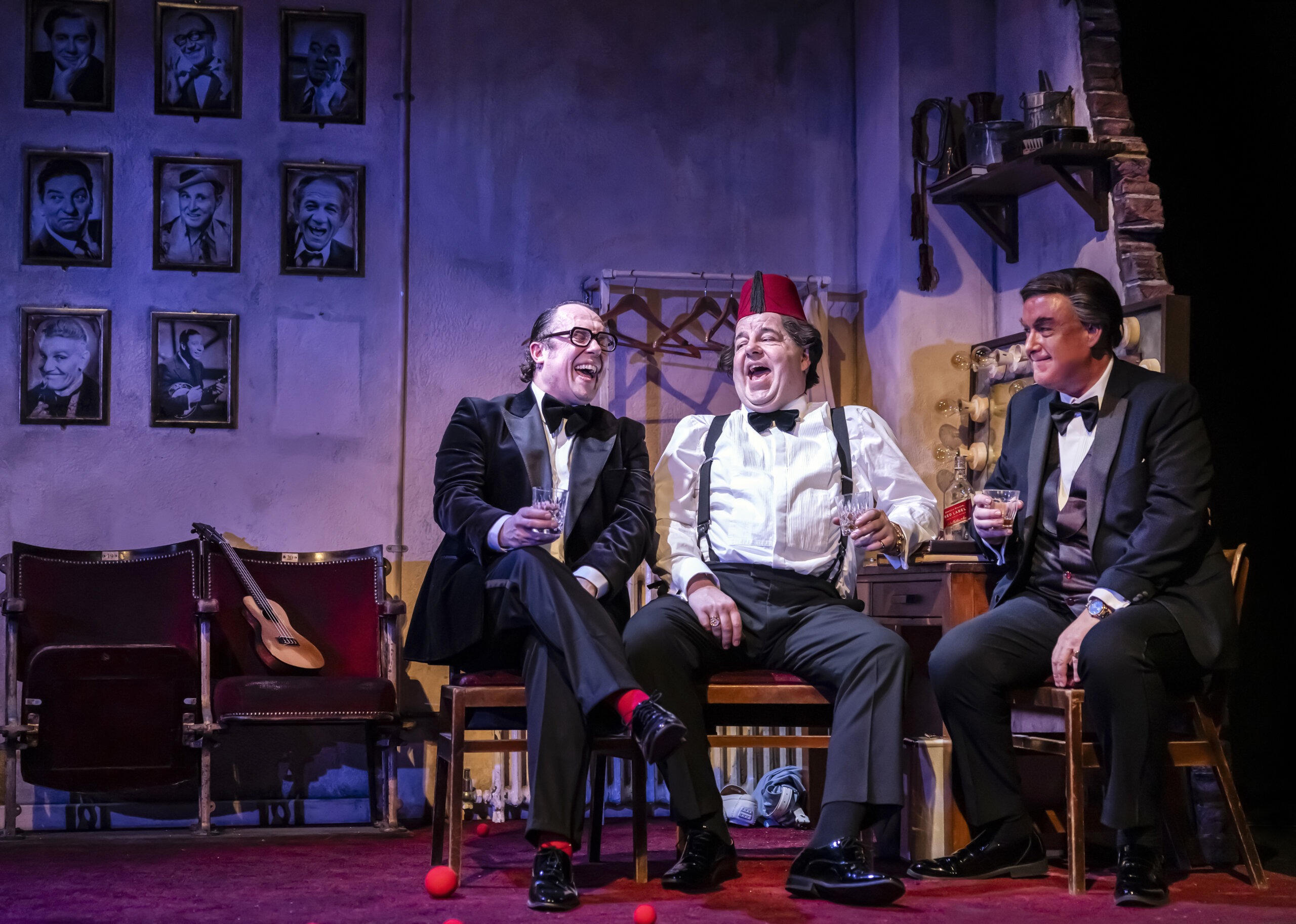
This may sound like the setup for a joke, but it is in fact the setup of The Last Laugh, a play that explores what might have happened if three of the biggest names in British comedy of the 1970s and early ‘80s had shared a dressing room. The men in question are prop comedian and magician Tommy Cooper, half of the perpetually popular double act Morecambe and Wise Eric Morecambe, and comedy writer, stand-up comedian and game show host Bob Monkhouse. The three trade jokes, discuss their heroes, wind each other up, and talk about the business in a 80 minute one act play that nicely balances pathos with the fun, and will bring back fond memories of their classic routines, shows and catchphrases, as well as remind you how tragically early we lost two of them.
The biggest hurdle with something like this is the casting. Fortunately, The Last Laugh hits a bulls-eye here by having three exceptionally talented actors who (along with Paul Hendy’s script) take their performances way beyond impersonations, and offer some insight into what made these men tick. Damian Williams is Tommy Cooper, and although on the surface this may seem the easiest to pull off since Cooper is one of the most impersonated celebrities in British history, Williams brings far more to the character than his trademark laugh and mannerisms. Eric Morecambe’s shoes are filled by Bob Golding whose infectiously enthusiastic and charming portrayal of this much-loved comedian provides most of the heart of the piece, while Simon Cartwright is an eerily accurate Bob Monkhouse.

Hendy has made a good choice in the three characters he has pushed together. While Cooper and Morecambe come across as naturally funny entertainers who relied a lot on writers and who the public adored, Monkhouse wrote his own (and other people’s) material and had to work very hard to find public affection. This dynamic between the three is the base of the most interesting parts of the play, as they discuss what makes a joke funny, what makes a person funny, the importance of the writer, and what drives someone to want to make people laugh for a living.
The script also briefly mentions other comedians such as Max Miller, George Formby and the dreaded Mike and Bernie Winters, touches upon the personal lives of the characters (Monkhouse’s was especially tragic) and delivers a generous helping of jokes and bits from their acts. Of course, none of this will make the slightest sense to anyone under the age of 50 and although the play brilliantly trades on the audience’s fondness for these men and their work, by relying heavily on previous knowledge of the subject matter, it doesn’t offer much for anyone outside of the target demographic.
The Last Laugh is an amusing evening of nostalgia for a time when we spent Sunday nights Live at the London Palladium, would see Bob Monkhouse host about six different game shows in one week, and found someone coughing “Arsenal” hilarious. It may lack in the way of narrative drive or drama, but as a tribute to three masters of their trade, this really hits the spot.
Runs until 28th June 2025
