

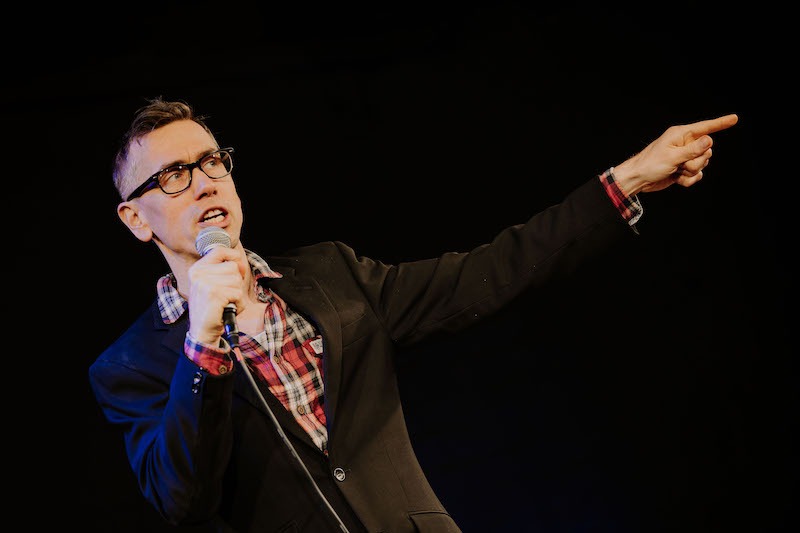
Writer: Daniel Bye
Imaginary Friends is not a conventional solo comedy, but it captivates the audience through Daniel Bye’s sharp wit and compelling performance.
In this one-man performance, Bye adopts the persona of Dan, using a first-person narrative to reflect on the loss of his brother. What begins as a personal journey soon expands into a broader critique of social news, politicians and media personalities. Dan’s thinking process spirals toward a grim but surprisingly understandable conclusion: the end of humanity. However, in the show’s final moments, Bye offers a moving reaffirmation of humanity’s value, enhancing resonance to a narrative that floats thoughtfully through current social and political concerns.
The performance begins with an easy flow. Bye starts by casually engaging the audience before shifting into his character’s personal story, pulling the audience gently into Dan’s memories. He moves fluidly between various roles, including host, storyteller and character, handling shifts in time and space with clarity and confidence. The stage is strategically divided into three functional zones: a microphone stand to the left, open space in the centre, and a tea table with a chair to the right, which provides props for the performance. This spatial arrangement helps the audience intuitively track Bye’s transitions and the evolving narrative perspective. Though the first act loses some of its momentum midway, the second act ties the threads together with clarity.
As a 90-minute solo performance, the show can hold attention throughout because of Bye’s incisive writing and dynamic presence. His political commentary and observations are sharp, weaving in references to current figures and events with insight, while his physical performance, along with the accurate use of props and sound cues, keeps the live show fresh and engaging. These elements remind the audience that there is always something more just around the corner.
Interestingly, the structure of this production is flexible, suggesting room for future development. On the one hand, its strong ties to British politics may limit its accessibility for international audience members. On the other hand, to some extent, the themes, particularly the crisis of humanity, are universal, especially in an age where artificial intelligence looms large in public discourse.
The use of the signal lights at the back of the stage can be further improved. Their purpose and indications of different colours are not clearly explained, which can leave viewers puzzled about their meaning and sequence. Additionally, the final moments of the performance could use a bit more clarity or emphasis to signal the conclusion.
Runs until 24 May 2025
