

Writer: Jack Bradfield
Director: Ed Madden
Dungeons and Dragons, the granddaddy of tabletop role-playing games, is having a comeback of late. Not that it ever really went away, but the people who bought into its semi-improvised fantasy storytelling in the 1970s and 1980s are now the ones in charge of recycling big IPs in Hollywood, which helps renew the cycle. From Onward and Stranger Things to the ridiculously fun Dungeons & Dragons movie itself, D&D is hard to escape on screen, which then encourages more people to take it up for themselves.
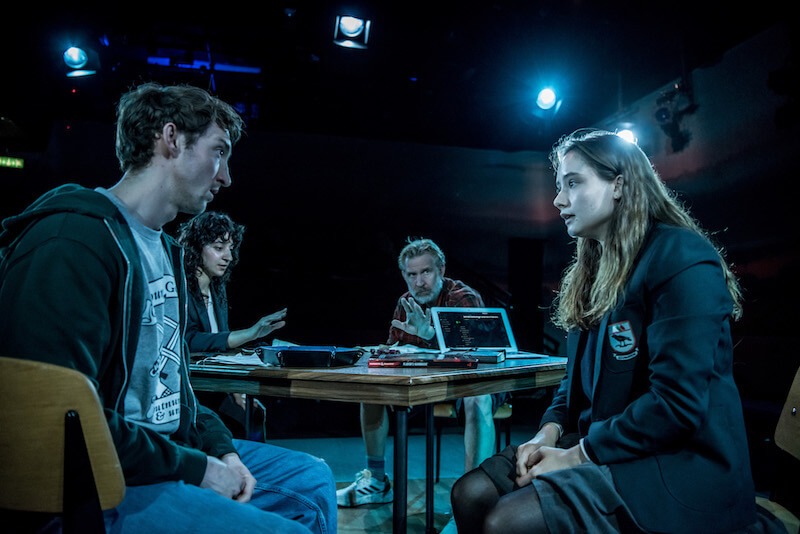
Jack Bradfield’s play focuses on a small group of players who meet once a week in a Bromley board game café. Sixteen-year-old Jess (Ruby Stokes) acts as Dungeon Master, directing two older players, Jamie Bisping’s lackadaisical Milo and Sara Hazemi as Maryn, a junior lawyer with right-on views she has to set aside while working for a predatory City firm.
There is fun to be had as the characters switch between their real-life personas and their fantasy creations. Bradfield plays with the spikiness between Milo and Maryn, picking holes in each other’s game personas and attitudes to the campaign. At times, it seems as if Jess is the older, saner member of the party, even as 55-year-old café owner Dennis (Paul Thornley) joins in the campaign.
The reason behind the group’s existence is slowly and sensitively revealed, as snippets emerge about Jess’s late brother, the person the trio of players all had in common. But there isn’t too much time for introspection, especially when Dennis’s girlfriend Bev enters the picture.
A woman whose love of board games barely extends beyond Monopoly, Debra Baker’s Deb amplifies the comedy moments preceding her character’s entrance. Her bemusement at the antics of the D&D players allows for a moment of reflection that from the outside, it can look like the strangest, nerdiest of pastimes.
But as Deb gets drawn into the playing, and as it transpires that she, too, knew Jess’s brother, the parallels between the campaigns Jess is guiding the players through and her brother’s real-life struggles with his mental health become much clearer. As the gang tries to get Jess to accept that the campaign must conclude, director Ed Madden shifts up the action as the players don LARPing outfits and begin to re-enact their battle with the Nightmare King.
The build-up throughout the play works well, such that the final climactic showdown carries emotional heft even as the dice keep rolling to determine the outcome. Max Pappenheim’s sound design, which started the play with the over-the-top pomposity of a fantasy-inspired score, works well to evoke the underground caverns the clan of warriors struggle through. And if the allegory in the campaign occasionally feels too obvious, the six-strong cast sells the hell out of it.
Ultimately, this is a tale of acceptance. Acceptance that losing oneself in a fantasy world need not prevent one from engaging in the real one; that change is inevitable, however scary; that honouring someone’s memory involves more than reliving their favourite activity. But it also advocates for the communal spirit inherent in Dungeons and Dragons: whether in a fantasy campaign or real life, groups of friends combine their myriad skills in surprising and beneficial ways.
Now, where is that 20-sided die? A quest is coming on…
Continues until 5 April 2025
