

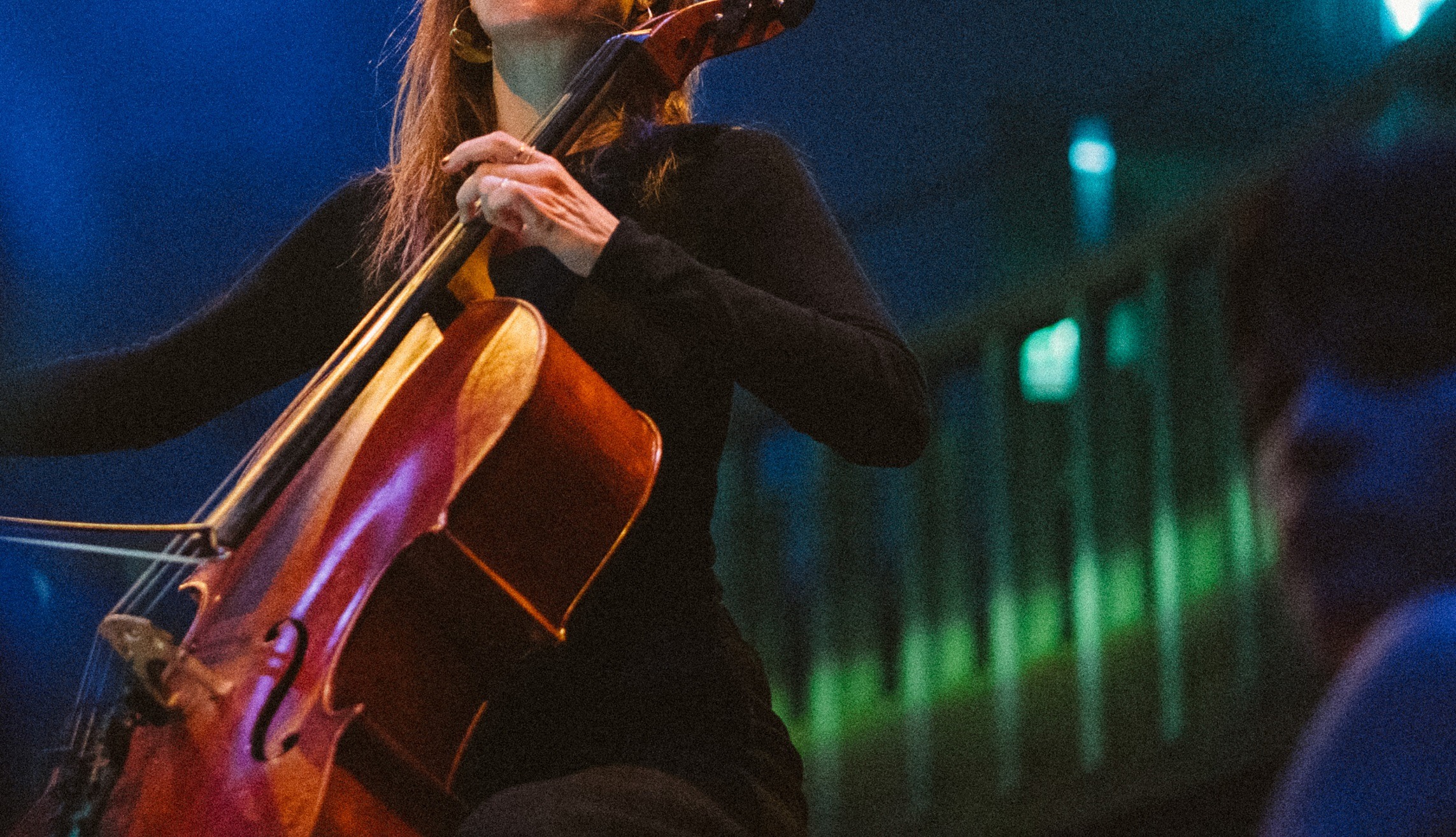
The “Distilled” concerts are fairly short informal afternoon concerts in the Howard Assembly Room, given by groups of musicians, mostly from the Opera North Orchestra. In this case six mainly section principals (Katie Stillman and Katherine New – violins -, David Aspin and Lourenco Mecedo Sampaio – viola – and Jessica Burroughs and Daniel Bull – cellos) delivered a stunning performance of Brahms’ String Sextet No. 2.
This relatively early work is full of the passion of youth: the programme informs us that Brahms’ guilt over his treatment of an erstwhile fiancee was one factor in its composition which it’s easy to believe. First violin Katie Stillman, introducing the piece at the concert, emphasised the conversations between instruments that are possible with a sextet, especially, in this case, in the first movement. So it proved: the soaring melody for violin was taken up by Jessica Burroughs’ cello before the whole sextet became entangled in vivid exchanges out of which merged a serene cello melody. The impassioned intensity of this movement drew (unusually) warm applause.

The second movement, a Scherzo, featured a dramatic switch from the initial Allegro non troppo to an ebullient Presto giacoso, accomplished with perfect precision as, indeed, was the brief return of the Presto at the very end. The Adagio variations of the third movement encompassed major mood swings, from solemn to vigorous and lively and the final movement was a joyful release, building to a full-throttle climax that completed a remarkable performance, precise and impassioned.
A piece by contemporary American composer Caroline Shaw commenced the programme. Entr’acte for string quartet (Sampaio and Bull sitting this one out) is an attractive, if rather eccentric piece which provided a nice contrast to the string sextet to follow. Jessica Burroughs introduced this one – these not too learned introductions are a pleasant feature – and Katie Stillman and Katherine New demonstrated some of the odd features, such as extraordinarily muted violin and a clock effect.
After a strictly tonal and vaguely hymn-like opening melody had faded almost to nothing, a pizzicato passage, increasingly atonal, with all four players pursuing their own course, built to a frenzied climax, then, as the violins faded to nothing, the solo cello was left to meditate peacefully on all that had gone before. Caroline Shaw’s expressed love for the other side of Alice’s looking glass sprang to mind.
All in all, this was the perfect way to spend a rainy Sunday afternoon.
Reviewed on 17th November 2024
