

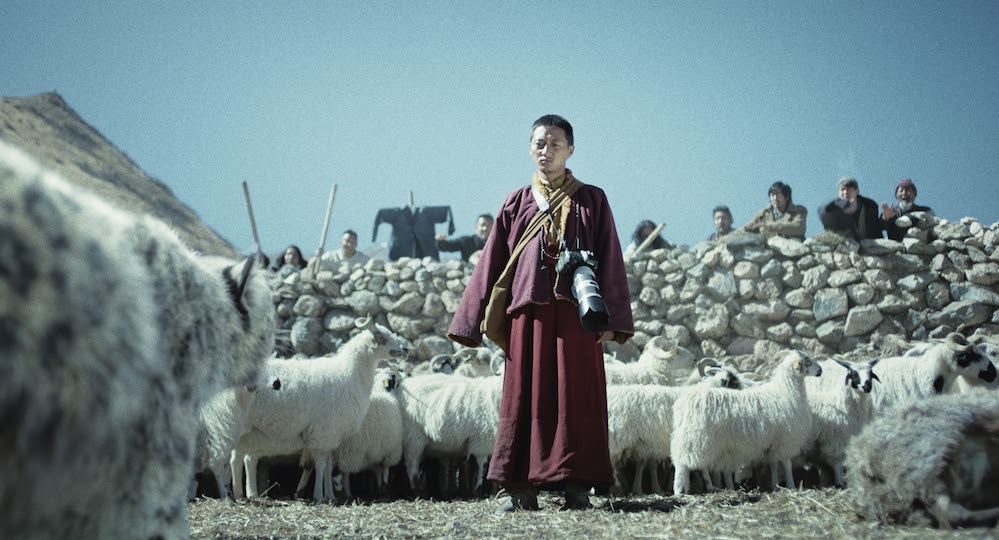
Writer and director: Pema Tseden
Despite the title it is unlikely Pema Tseden’s Snow Leopard will delight a natural historian like David Attenborough. At one point the characters watch a documentary in which the commentator describes the snow leopard’s mating rituals in glowing terms using, significantly, the only English spoken in the film. Tseden’s film suggests people living nearer to the snow leopards may have a less idealised view of the animal than those living in comfort miles from the scene.
An aging farmer in the Qinghai province on the Tibetan Plateau finds nine of his rams have been killed by a snow leopard which, by chance, is now trapped in the sheep enclosure. The farmer’s two sons have very different opinions on the action which should be taken.
Jinpa takes the practical view killing the animal will ensure it does not attack sheep again. All that is holding him back is an awareness the snow leopard’s status as globally endangered may, should he release the animal, help gain financial compensation for the lost rams. Tseten Tashi takes what initially seems a more romantic view, pointing out the snow leopard’s mythical reputation, but which later comes closer to delusional. Then there are the representatives of the authorities who have little concern for the financial loss incurred by the farmer but are worried how they will be perceived by the wider world if the snow leopard comes to harm. Aware of the potential for controversy a ramshackle documentary film crew pops up hoping to exploit the situation.
The film examines the conflict arising from modern/ urban values being imposed upon traditional/ rural communities which is exacerbated by cultural issues – the farmers are Tibetans while the police speak Chinese. The farmers represent forgotten and marginalised communities around the world; when well-meaning politicians pass laws safeguarding animals like snow leopards the farmers must endure the consequences for their livelihoods and face criticism if they try and object.
The film includes the expected shots of snowy hills and, to add a sentimental touch, features the anxious cries of the snow leopard’s cub searching for the missing parent. However, Tseden does not allow the audience to indulge in an idealised view. Most of the film takes place on a landscape so desolate and barren it might as well be on the moon.
Tseden uses the character of Tseten Tashi to satirise the starry-eyed romantic attitude towards endangered species. Tseten Tashi has already stepped away from practical considerations with his plan to become a monk and his online videos of snow leopards have earned him the title ‘The Snow Leopard Monk’. Monochrome footage takes the audience inside Tseten Tashi’s fantasy life, initially claiming to have already saved the snow leopard from certain death. This becomes full delusion as he slips into a Walt Disney style fantasy where the snow leopard returns the favour allowing him to ride on its back to safety. When Tseten Tashi says he really just wants to be a snow leopard you have conclude it is possible to be too romantic.
Director Tseden sets an authentic, raw atmosphere. In the middle of a rant to the documentarian’s camera Jinpa breaks off to blow his nose. But Tseden is aware of the ludicrous nature of the situation. The documentarians become so caught up in the drama of the moment they neglect to film Tseten Tashi stepping into the sheep pen to confront the snow leopard. A tractor driver hired to use his machine to recover the bodies of the slaughtered rams concludes it is not possible and just trundles off.
Snow Leopard is a bracing reminder the impact of high-minded ideals is often felt by people at the sharp end whose financial situation may compel them to regard such principles as indulgencies. The downbeat vibe and occasionally shouty performances may, however, limit the appeal of the film.
Snow Leopard is screening at the London Breeze Film Festival 2024 running from 23-27 October.
