

Writers: Andrew Kevin Walker, Alexis Nolent and Luc Jacamon
Director: David Fincher
In David Fincher’s celluloid adaptation of of Alexis Nolent’s graphic novel The Killer illustrated by Luc Jacamon, the title character sets the rules from the start – follow the plan, never improvise and no empathy – and it is a mantra that works perfectly until it doesn’t and The Killer spends the rest of the film convincing himself of the rules as he tracks back through a chain of events which Fincher brings to the screen in five geographical chapters. A film that plays with pace and sound, The Killer is also notable for bringing Michael Fassbender back to the screen after a four-year absence.
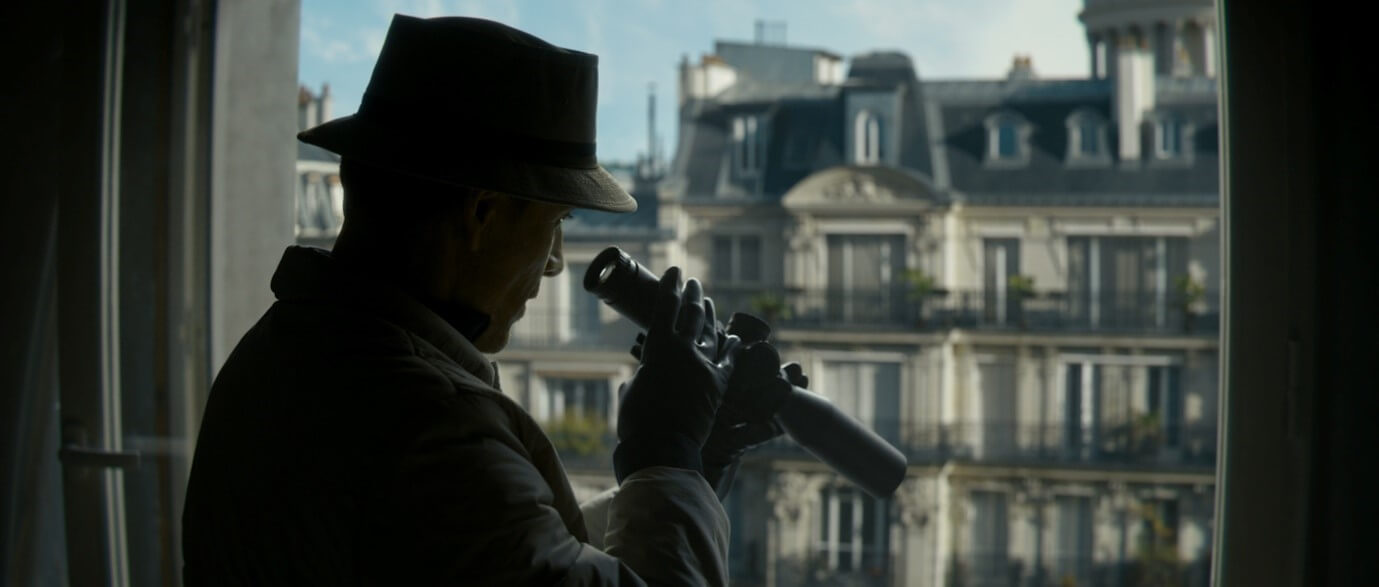
Patiently awaiting his target in an abandoned Paris office with direct visual access to a top floor apartment, an assassin fills his time with yoga, trips to MacDonalds and trying to stay alert. When the hit goes wrong following a split-second error of judgement, The Killer flies home to discover his client has exacted a personal revenge. On the trail of the man who ultimately paid for his services, the hired gun puts all his energies into following the trail back to his unknown employer.
Fincher’s film for Netflix is an accomplished 110-minute thriller that frequently toys with the viewer by constantly mixing up the speed of the action. Sometimes it lingers slowly, watching, waiting, planning, putting in the time to get his target just where Fincher wants us, and like its professional assassin antihero, The Killer is a coiled spring ready to burst into action on cue. When the hits of adrenaline come, they are tense and thrilling, bursts of energetic fight sequences, abrupt ends to conversation and endlessly inventive modes of death that showcase the relentless persistence of The Killer as well as his implacable professionalism.
Much of the tension comes from Trent Reznor and Atticus Ross’ music, a soundscape for this The Smiths-loving murderer that is consistently and consumingly moving between his point of view and the viewer’s observation of him. Listening to The Smiths songs constantly, Fincher and his team move between the full track which the character hears, to a tinny version playing in his headphones heard from a distance as well as muffled music coming from his van. It applies too to all the noise effects in the movie, city and similar background sounds that cut sharply from overwhelming to silent depending on The Killer’s movement in and out of rooms, vehicles or buildings which absorbs the audience in his experience without sympathising too much with his plight.
It is also a film that has relatively little dialogue – created here by Andrew Kevin Walker – mixing occasional conversation with voiceover work that shapes the story. And one way to guarantee the success of a film like this, is to put Michael Fassbender in every scene, an actor with a rare and compelling stillness that conveys a great deal, treading a line between cold detachment, menace and charisma that have been a feature of some of his best roles. A scene late in the movie with Tilda Swinton leaves her doing almost all of the talking while Fassbender’s The Killer calmly observes her, already certain of the only outcome of their duologue, his purpose and surety writ large in his unruffled glare.
Like many action films these days, The Killer is invariably influenced by Bond with its international travel pattern, set piece fight sequences and even a moment where the assassin readies himself for an intruder sitting in an unlit chair with a gun to hand. But Fincher keeps the focus on the process and preparation for a kill with multiple identities, stocked storage units and the bodily workouts that keep The Killer in shape. An intelligent adaptation of the graphic novel that retains a tight focus on its central character, this is a very welcome return for Fassbender.
The Killer is screening at the BFI London Film Festival 2023.
