

Writers: Erige Sehiri, Ghalya Lacroix and Peggy Hamann
Director: Erige Sehiri
The title, Under the Fig Trees, hints at a steamy tale of forbidden romance in a picturesque environment. However, the down-to-earth, reflective mood created by director Erige Sehiri (who co-wrote the film with Ghalya Lacroix and Peggy Hamann) suggests ‘’Just Another Working Day’’ might have been a more appropriate title.
Director Sehiri has a background in documentary filmmaking which is apparent in Under the Fig Trees. The film features non-professional actors with dialogue based upon their improvisations. There is the sense of entering in the middle of events that have been going on before the start of the film and which will continue after the final credits roll.
The first audible dialogue drops the audience into an ongoing conversation and there are loose ends left unresolved at the climax that might, or might not, be tied up on another day. A worker shown to have been stealing makes a clandestine phone call, but the tone is flirtatious suggesting arranging an assignation with a forbidden lover rather than with a contact for purloined fruit. There is the surprise revelation a character returning to the area after some years away is related to, and in conflict with, the owner of the fig orchard.
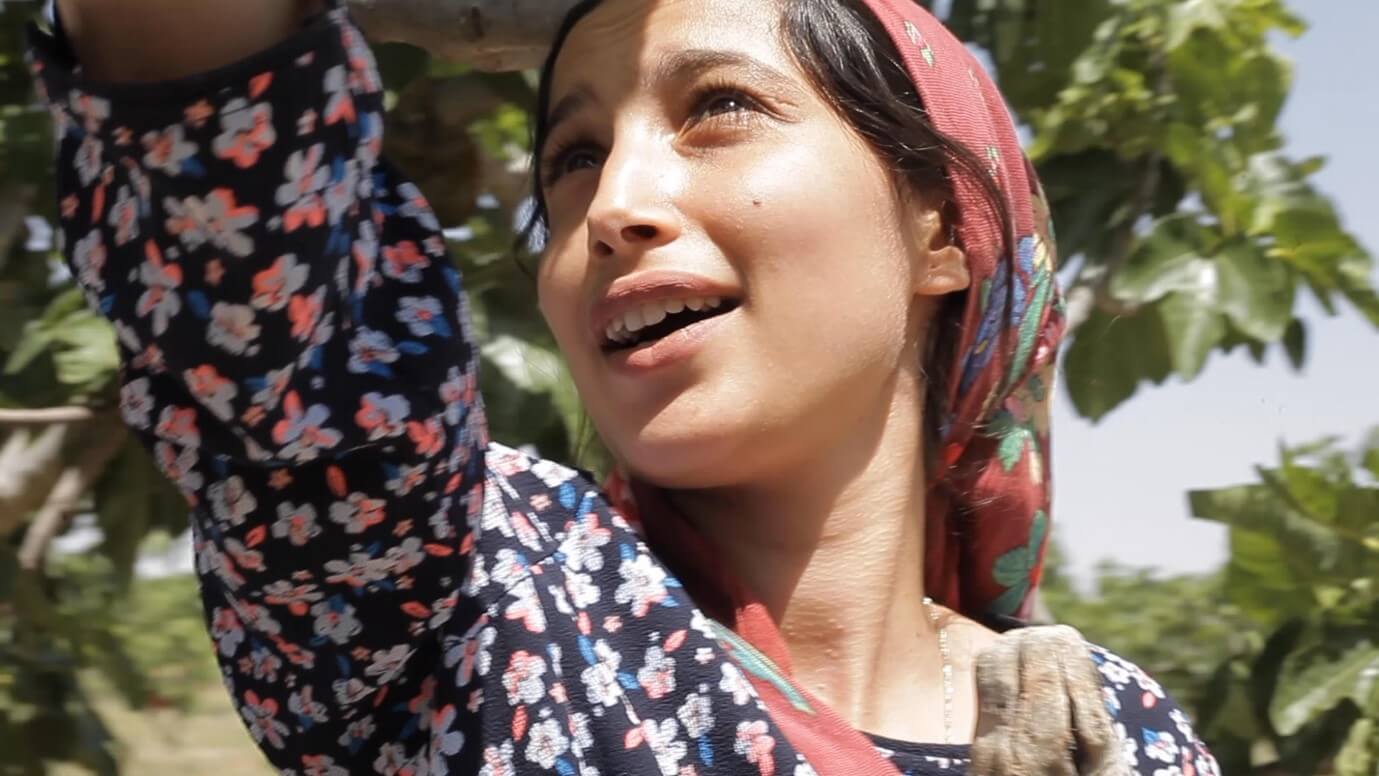
Under the Fig Trees focuses upon a group of teenage girls working in a Tunisian fig orchard during their summer break from school. They are away from their parents but under observation from the older female workers and the scrutiny of the men. It also becomes apparent they are judging each other based upon their traditional Muslim values. Fidé (Fidé Fdhili) is subject to the greatest scrutiny appearing the most worldly of the group wearing practical overalls and risking scandal by flirting with the foreman to gain a better seat on the transport to the orchard. But she is a complex figure – although modestly tied back strands of hair hang attractively around her face and she may already have endured an abusive relationship.
Fidé’s sister Melek (Feten Fdhili) is disconcerted by the unexpected return of her old flame Abdou (Abdelhak Mrabti). But he has emotional baggage having been prompted to leave by the deaths of his parents and now being alienated from his uncle, who, it turns out, owns the fig orchard. The foreman is convinced theft is being committed and his suspicion creates tension in the workplace.
The passion in Under the Fig Trees is distinctly low-burn, flirtatious glances from under lowered eyes. Opportunity for more nudge-nudge innuendo (a male character is invited to use his ‘big stick’) is resolutely ignored. This makes the sudden bursts of emotion all the more powerful. While a verbal cat fight between Fidé and a co-worker feels formulaic, a worker becoming moved to tears by the memory a song evokes is convincing and effective.
The introduction of Abdou as a novice fig-picker allows Sehiri to familiarise the audience with the basics of the work- how to identify ripe figs and avoid damage. It is better to break an arm than the branch of a tree as the latter will incur forfeiture of wages. The atmosphere is communal with the workers sharing food during breaks. Despite the occasional criticism of colleagues, particularly Fidé, cultural differences are respected; at break times some pray while others gossip and sing. The conversations between the teenagers suggest they are reviewing their cultural traditions and deciding which are relevant or should be challenged. This tolerant attitude makes it all the more surprising a worker is willing to report possible light-fingered colleagues to the foreman for financial reward.
There is a sense the more entitled of the workers see the orchard as isolated from wider society with its own rules. A worker who commits the error of breaking a branch is belittled and humiliated. The foreman feels entitled to sexually harass Melek. At the conclusion of the working day the teenagers transform themselves donning make-up as if to make clear they are ready to re-enter the wider world.
There is little tension in Under the Fig Trees. It does, however, offer an engaging snapshot of a group of people coming to terms with the realisation their traditional beliefs may be challenged or may have to evolve.
Under the Fig Trees is released in the UK and Ireland on 19 May 2023.
