

Writer: Deborah Bruce
Director: Róisín McBrinn
Believe women. Deborah Bruce’s new play Dixon and Daughters at the National Theatre is a difficult play to talk about without spoilers, the slow drip feed of plot details and quiet revelations casually slotted into conversation build to a significant confrontation. Yet, to explain what that is and even how it happens would take away from the impact of the play and the way that Bruce needs the audience to experience it. But it hinges on a difficult family dynamic and whether women believe each other.
Having served her time, the fractious Mary returns from prison to find her daughter Julie living in the house having left her partner and children. Displeased, Mary refuses to engage and finds reason to criticise her eldest child while second daughter Bernie and granddaughter Ella try to keep the peace. Her irritation only increases when she hears that Tina, now known as Briana, has been in the house and wants Mary to hear her truth.
Bruce has written a 90-minute piece about family trauma and the deep scars emerging from the lives of these women, all of whom experience different degrees of societal pressure to conceal and downplay their interactions with men. The Dixon of the title never appears but becomes a significant shadow over this household as the story unfolds, a symbol of a broader problem that the writer carefully layers through the show and cuts through every relationship.
Bruce controls how information is delivered to the audience, often in small asides or casual revelations that sometimes adjust the direction of the play, recasting what the audience has assumed or had been led to believe. And the pacing, controlled by director Róisín McBrinn, gives shape to those changes of gear as character, behaviour and the reason that Mary was in prison slowly become clear.
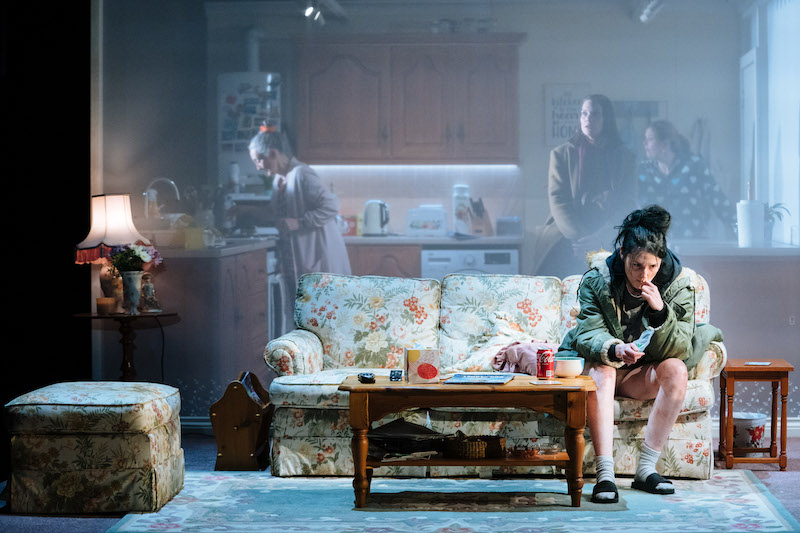
The play is less successful at managing the overall contrasts been comedy and its darker themes with a big confrontational scene across multiple rooms in Kat Heath’s full house set lacking the jeopardy or the fierce energy it needs to explain why the women choose that moment to bring their secrets to a head, the actors obviously holding back in their physical altercations that feel over-rehearsed. Bruce’s writing has some excellent lines, but the introduction of Leigh, a woman with lived experience of the criminal justice system and now homeless, feels both melodramatic and superfluous in the drama emanating from the tighter family unit, especially when Leigh’s comedy cuts across their experience.
Bríd Brennan is wonderful as Mary, a crotchety creation with little maternal feeling or appreciation for her daughters. Brennan is the embodiment of bottled anger, furious with anyone she thinks has let her down, making Mary obstinate and with a hard surface that refuses to yield. Alison Fitzjohn is particularly good as Briana, making her steadily determined and insistent as the context changes around her, while Liz White as Bernie and Andrea Lowe as Julie complete the family, although a little more about both their lives and inherited patterns of trauma would be useful.
McBrinn uses a classic family dynamic with occasional horror accents to suggest that a buried secret will emerge with Paule Constable’s lighting design providing those shifts in emphasis. Dixon and Daughters has a number of trigger warnings attached which give clear guidance on the show’s content if needed, but the way Bruce navigates the audience towards the truth is interesting to experience through the writing, even if it needed a little longer to explore the consequences.
Runs until 10 June 2023
