

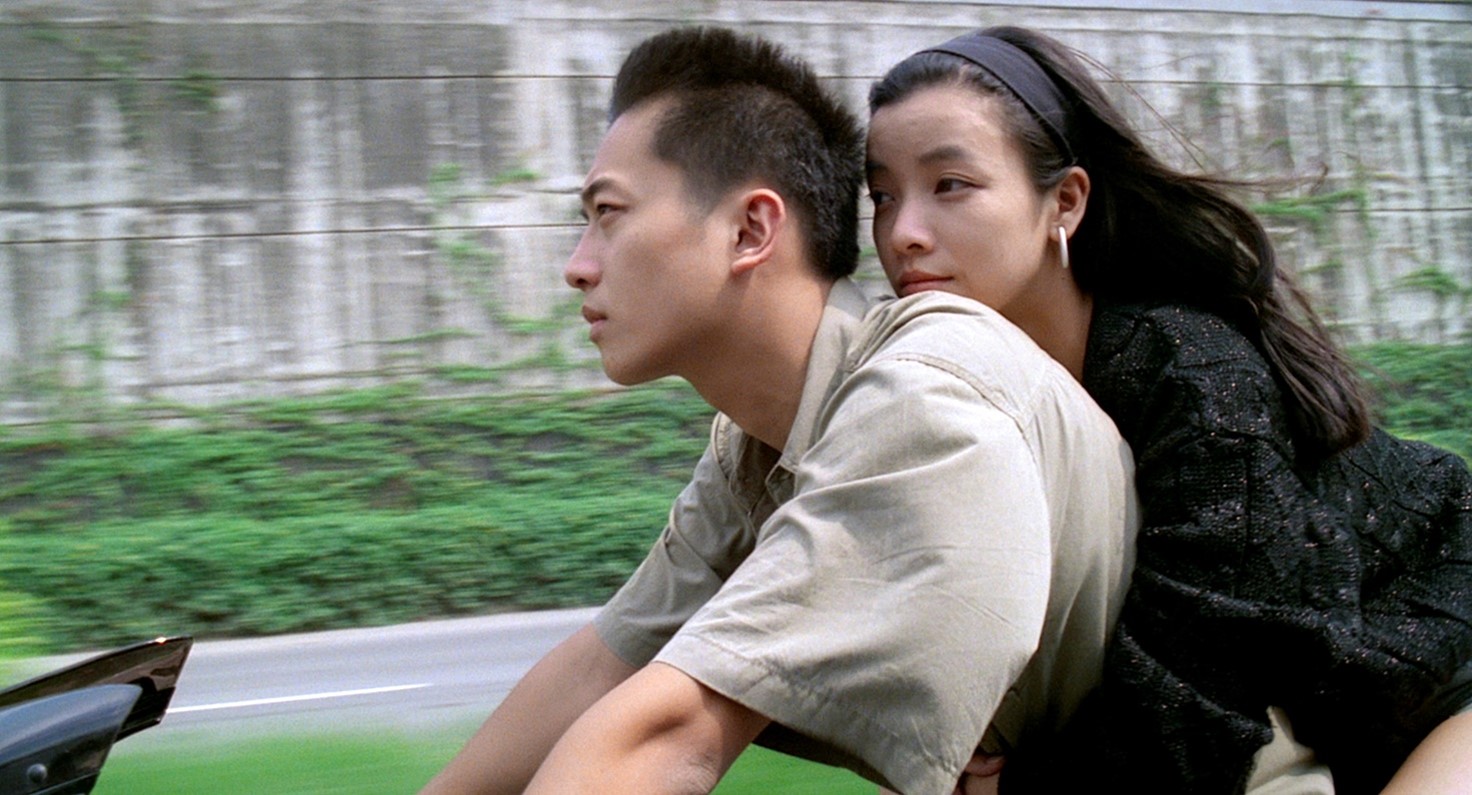
The willingness of rebels to reject conventional behaviour and challenge authority means they are perceived as romantic and daring figures who symbolise freedom. The use of the term in Rebels of the Neon God must be ironic as the lifestyles of the characters are so relentlessly futile and unrewarding as to make conventionality appealing. It is doubtful, if any of the characters was asked what they were rebelling against, they would have the wit to reply ‘’ Whadda you got?’’.
The film was made in 1992 so pre-dates the development of home computer gaming – the neon god of the title is the video arcade games played compulsively by two of the characters. Otherwise, the age of the film is apparent only in the fact everyone smokes like chimneys.
Writer/ director Tsai Ming-liang illustrates the disaffected lifestyles of characters by adopting the audacious approach of allowing unconnected storylines to drift apparently aimlessly along occasionally intersecting. Tsai Ming-liang never articulates the ambitions or hopes of the characters leaving the viewer to try to identify their motivations. There is, however, the bleak possibility the characters simply have no aspirations and are just surviving rather than enjoying life.
Ah Tze (Chen Chao-jung) and Ah Ping (Jen Chang-bin) are petty thieves living in squalid conditions in Taipei and spending their time playing arcade games. Ah Kuei (Wang Yu-wen), the worse for wear after a one-night stand with a neighbour, accepts a lift from Tze. Meanwhile, student Hsiao Kang (Lee Kang-sheng) having fallen into disgrace or just not lived up to his potential, is studying in a remedial college but making little effort. Travelling in his father’s taxi he spots Tze and is possibility envious of his freewheeling lifestyle or attracted to his good-looking passenger.
A loose chain of events develops- for no reason Tze damages the taxi as he passes while Hsiao Kang drops out of college and, having been thrown out of the family home, detects and begins to stalk the petty thieves. Tze and Kuei begin a tentative relationship, but the former has bad luck – his scooter is vandalised (by Hsiao Kang) and in a somewhat dumb move he attempts to sell stolen merchandise back to the person from whom it was pinched leading to a disastrous outcome.
Director Tsai Ming-liang pays tribute to iconic rebels from the past. The video arcade features a massive poster of James Dean. But, as with much else in the film, there is the sense of reality failing to live up to heroic fictional standards. A fortune-teller announces Hsiao Kang is the reincarnation of an ancient god famed for causing mischief, but his reaction is juvenile – striking a series of silly poses. Hsiao Kang celebrates Tze’s anger at finding his scooter vandalised by childishly bouncing on a bed until hitting his head on the ceiling.
An atmosphere of ennui hangs over the film. No-one has any sense of direction or ambition. When Tze and Kuei agree they want to leave the town neither has any idea where they want to go. Tze has the romantic instinct of a panda – leaving Kuei alone in the hotel room where they have spent the night without any sort of goodbye. None of the characters could be considered in any way cool. A daring ride through the city streets is followed by Ping throwing up and Kuei getting so drunk as to be incapable of walking.
Hsiao Kang is the classic disaffected teen. He might have an instinct for mischief but lacks the imagination to make his pranks effective. Hsiao Kang simply does not know what he wants and tends towards being a copycat – half-heartedly stalking the petty thieves. He seems to be going through the motions of rebellion, having joined an agency to meet women he leaves without engaging once.
There is a mood not so much of decadence as of squalor and the jaded characters seem to have become accustomed to the disrepair. Tze makes ineffective efforts to prevent the floor of his flat from flooding. The only character who shows any positive indication of developing is Hsiao Kang’s father who, having witnessed an indication of how his alienated son might end up, leaves the household door unlocked, symbolising his willingness to reconcile.
Rebels of the Neon God ought to be unwatchable combining unsympathetic and trivial characters with a directionless plot but Tsai Ming-liang’s approach of jumping from one storyline to another and comparing empty but oddly engaging lives creates momentum. It may be like watching a car crash, but it is hard to look away.
Queer East Festival 2023 takes place 18 – 30 April across venues in London. For further information: https://
