

Writer: Michael John O’Neill
Director: Lucy Morrison
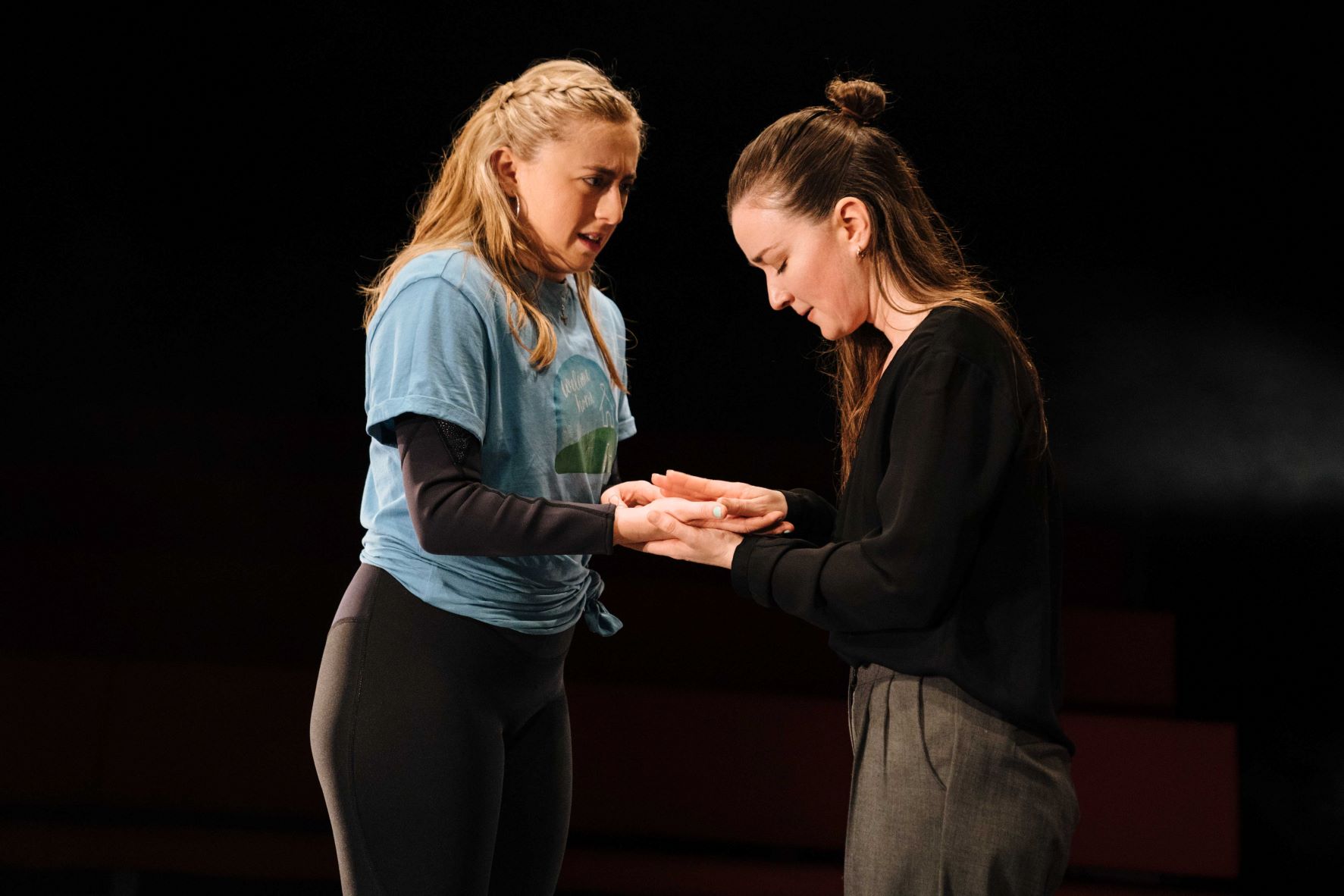
Sisters Kelly and Gill have not seen each other for years. Kelly, now eighteen, is deeply involved with one of Northern Ireland’s relatively new Pentecostal megachurches. Her older sister is sceptical, to say the least.
At the start of Michael John O’Neill’s play Akedah, which won the Brentwood Prize Original New Voice Award in 2019, the playwright seems to be heading towards a critique of what some might suggest is cult-like behaviour in such establishments. Certainly, Amy Molloy’s Gill displays a dubiousness of the hold the unseen pastor Richard has over Kelly (Ruby Campbell) and other impressionable teenage girls.
Soon, though, it becomes apparent that the real focus is the schism between the sisters and the childhood traumas that shaped them both before it separated them. Kelly remembers their mother as a troubled woman who got her youngest daughter out of a horrendous situation and into the care system. For Gill, fifteen years her senior and who never got out, her experience with both parents was vastly different, and all the more damaging.
O’Neill’s script hints at the darkness at the heart of the sisters’ tragic upbringing and explodes with detail as Gill’s fragile sanity begins to shatter. Director Lucy Morrison may get Molloy to peak a little too early in her breakdown, but the actor is able to maintain the various strands of her breaking psyche together long enough to keep the play on track.
In comparison, Campbell comes across as the stable, well-adjusted sibling, who has found calm and serenity after joining Richard’s community straight from care. But the healing practices she has learned – which, when stripped of their religious trappings, have a lot in common with talking therapies espoused by modern psychiatry – lead her to believe that she can apply them to her troubled sister, with potentially disastrous results for them both.
The introduction of Mairead McKinley as Sarah, an older woman whose baptism Kelly was conducting when Gill burst on the scene, brings with her a sign of the good work the younger sister has been able to do. With her comes a renewed tension between the three characters, injecting the story with vigour just as the dynamic between the sisters is beginning to flag.
There is perhaps one plot contrivance too many that O’Neill uses to arrange his chessboard of characters, making their emotional journey less affecting than they could. But the intensity and ambiguity at play make for an interesting dynamic that is never short of drama.
Continues until 18 March 2023
