

Writer and Director: Roberta Grossman
What happened to survivors of the Holocaust was complex and nowhere near resolved as individuals all over the world and the State of Israel continue to negotiate reparations with Germany. But the whole concept of settlement payments has been hugely controversial for Jewish groups who cannot place a financial sum on the moral magnitude of Jewish persecution and annihilation. Roberta Grossman’s 75-minute documentary Reckonings, receiving its UK premiere at the UK Jewish Film Festival, explores the immediate aftermath of the Second World War and how the conversation about reparations first began.
Germany’s willingness to engage in discussions about responsibility for the Holocaust and to confront its actions as a nation is one of the most interesting aspects of its Post-war history. Reckonings actively admires this, charting the process first for Chancellor Konrad Adenauer, from public statements within Germany through to the signing of the first Luxemburg Agreements with Israel and the Claims Conference while explaining the nervousness of Jewish representatives as they pushed this, already controversial, agreement to its conclusion.
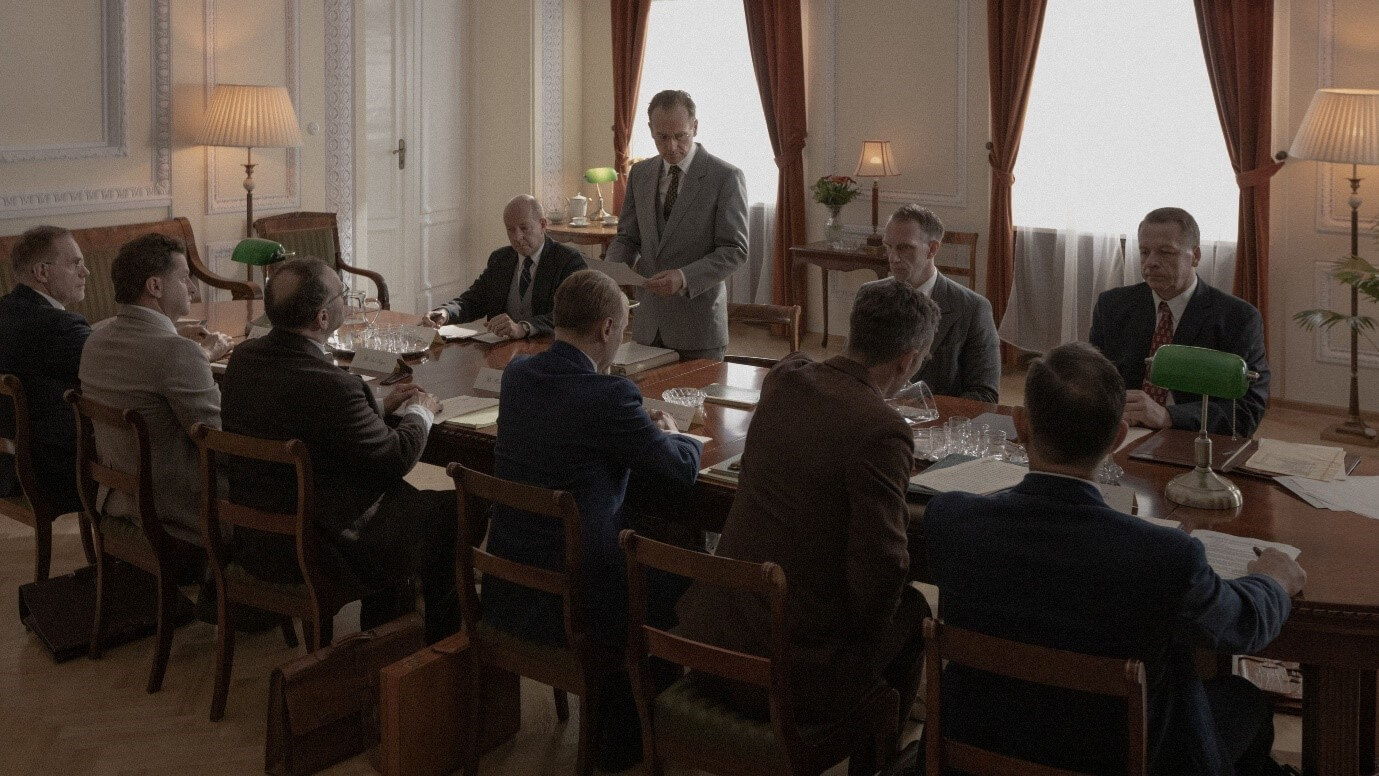
The focus in Reckonings is on the debate over whether restitution was ever possible and Grossman clearly presents the two strands of negotiation; first the larger claim made by Israel, for the establishment of the state following the influence of displaced refugees and survivors in the late 1940s, and the individual claims managed by the Claims Conference seeking compensation for stolen property and goods taken by the Nazis. On the whole that division is well managed by the documentary and the complex negotiation over many days in the conference room is clear – sometimes with dramatic reconstruction and at others with letters or official records underscoring an experience in which two Jewish organisations met separately with the German delegation as well as with each other to ensure voices were well represented.
The film is also very clear on the context for the European conference, repeatedly referencing the horrors of the Holocaust itself in original footage and photographs as a reminder of the scale of the discussions. It also examines the debt negotiations being conducted simultaneously in London as Germany were pressed to pay for damages to British and American property. But the film’s most important contribution is to record the testimony of Holocaust survivors who received reparations as well those who formed part of the delegations to understand the moral challenges of accepting a settlement and the, often very positive, use they put it to, including paying for their education.
Reckonings is occasionally confusing in its reference to individuals representing the Jewish groups, particularly cutting from photographs to an actor portraying them, and there is too little time to really understand who they all were and the different roles they played with any clarity. Yet, the film does emphasise the ongoing discussion of reparations to which Germany continues to attend, and why this is a continuing conversation. Forgiveness is more complicated, something many in the film both in the 1950s and today think will never come. Germany, at least, seem to have made its peace with that.
The UK Jewish Film Festival 2022 takes place in cinemas nationwide from 10 – 20 November, and online from 21-27 November.
