

Writer and Director: Lee Ji-eun
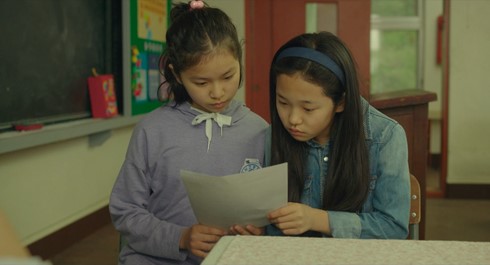
The Hill of Secrets, shown as part of this year’s London Korean Film Festival, marks Lee Ji-eun’s directorial debut. It’s an outstanding film with an unsentimentally charming script by Lee Ji-eun herself and a superlative central performance from Moon Seung-a as the 12-year-old Myung-eun.
Myung-eun is naturally eager-to-please, but is ground down by her struggling family who always abusive and angry. We hear every crunch and slurp as they wordlessly attack their shared meals. It’s the sort of attentiveness to sound reminiscent of Jane Campion’s films. Myung-eun’s mother resents being the bread-winner, working her fingers to the bone in their family’s dried-fish stall at the market, while her feckless husband simply naps. Her attitude to life has hardened. 2Give nothing to nobody” she snaps at Myung-eun when the child tries to give something to a beggar. There’s a rift too between the mother and her side of the family – a kindly older father, and his rather hopeless son, Uncle Jin-woo.
At the start of the new school year, Myung-eun is desperate to win the approval of her new young class teacher. But there’s a form to be filled in by the teacher in consultation with each pupil. In front of her class, Myung-eun is asked where her parents work. Too ashamed to tell the truth, Myung-eun makes up a fantasy about her father working for a fancy paper company. There’s a very funny sequence later on when Myung-eun, to provide photographic evidence of this successful father, manages to persuade a handsome young office worker to a supposed interview. Myung-eun shows equal initiative in running for class president with her imaginative idea of having a secret mail box, where pupils can post suggestions. At first it’s a great success. Myung gets a class library going and invents a new celebratory ritual for every pupil’s birthday. She herself begins to show real talent as a writer, winning a silver medal in a competition (‘Why not gold?’ asks her petulant father). Her stories allow her to develop her fiction of being part of a happy family.
But there is suffering ahead. Pupils tire of Myung-eun’s initiatives. Boxes of snacks, sent in by affluent parents, are evidently important currency. When Myung-eun manages to persuade her parents to contribute, pupils loftily reject the proferred bananas. Then a more obviously charming pupil who makes himself the teacher’s pet: Myung-eun’s face becomes etched with hurt and weariness. What else does she have to do to win approval?
Then there’s a fresh assault on her position: two mysteriously defiant sisters join the year group and to Myung-eun’s distress, quickly challenge her position as top writer. There’s a very funny scene in the library when Myung-eun weaponises the electrical pencil sharpener to indicate the battlelines being drawn up. But she has an important lesson to learn from them. Their writing wins prizes because they dare to tell the truth. Their situation is far worse than hers – they’re not really twins, for a start, and the mother of one of them runs a brothel. The private release for Myung-eun when she begins to write down the reality of her situation is evident. But a complex ethical question lies ahead.
Relatively little is said throughout the film, but Myung-eun’s expressive face, usually shown in tight close-up, is powerfully eloquent and tells an engrossing story.
The 17th London Korean Film Festival 2022 runs from 3 November – 17 November in cinemas across London. For more info: https://www.koreanfilm.
