

Writer and Director: Dmytro Sukholytkyy-Sobchuk
At present Ukrainians are seen in a heroic light; bravely resisting unspeakable odds and achieving amazing victories. With Pamfir writer and director Dmytro Sukholytkyy-Sobchuk takes a less romantic approach to the region, one so bleak as to suggest the only hope is to make a run for the border.
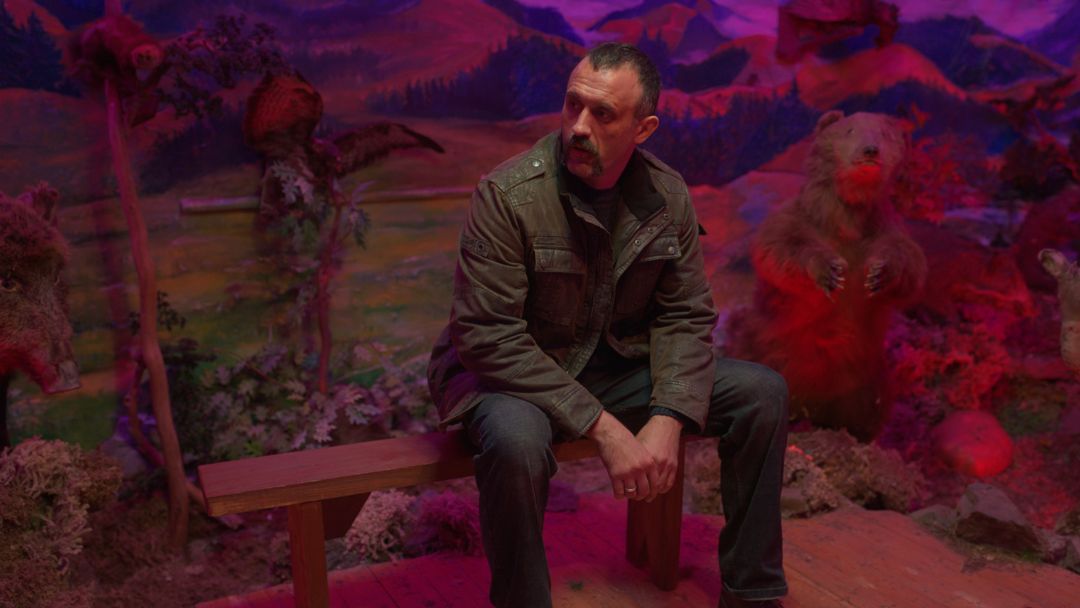
In a border village in Chernivtsi, Ukraine, crime is accepted as a way of life. It is is so integrated into the system the chief of police is corrupt and a godfather figure is in charge of the local forestry commission. Leonid, (Oleksandr Yatsentyuk) who is nicknamed “Pamfir’’ or ‘’Stone’’ gave up smuggling contraband into Romania through a tunnel system at the insistence of his wife Olena (Solomiya Kyrylova). He returns home after working legitimately in Poland to re-connect with his teenage son Nazar (Stanislav Potyak) during the pagan Malanka festival. In an effort to ensure his father does not leave again Nazar burns his work permit, but the fire gets out of hand causing extensive damage. To compensate for the damage Leonid is compelled to take on one last illegal job.
Pamfir features few of the staples associated with the gangster genre- only one gun is fired in the entire movie. Far from being sleek and sophisticated the smuggling operation is primitive and crude- hopped up on steroids the crooks run through the forest with boxes of cigarettes strapped to their backs. The atmosphere is closer to a horror movie with the sense of danger and threat coming from the pagan setting of the village or a western with the anti-hero forced to confront unfair odds.
It is implied crime is the only true employment in the village. Both of Leonid ‘s parents are involved, and, for such a small community, there is a heavyweight military presence to deter smugglers. The village is so dirt-poor it seems to be stuck in the past. Only the gangsters drive cars, Leonid and his family make do with bicycles or horse and cart. There is a primal, superstitious mood- as the family walk through the lush woods they are intimidated by, and make noises to deter, unseen animals.
Director Dmytro Sukholytkyy-Sobchuk takes a reflective approach discussing sacrifice and the limits of organised religion. As the local priest makes no effort to resist, indeed just kowtows to, the gangsters it is hardly surprising the pagan festival during which events take place has such significance for the villagers. The gangsters exploit even this situation with their strongman dominating the festival and challenging any potential opponents. Leonid sees religion as a source of comfort suitable for children but one that adults should be able to do without. His wife Olena, on the other hand, is so devout there is a hint she may regard a miscarriage, into which she physically pushed herself, as a sacrifice which persuaded her husband to cease smuggling.
Dmytro Sukholytkyy-Sobchuk’s script is sometimes obscure. It is hinted Leonid’s mother was involved in him turning his back on crime and the process resulted in his father being maimed. Yet this is never clarified so the consequences of his mother later telling tales lacks tragic impact.
Although the lead character is nicknamed ‘stone’ Oleksandr Yatsentyuk’s performance is restrained rather than inexpressive. Yatsentyuk shows subtle parental pride at how Leonid’s son is able to both comply with, and frustrate, an order to sing in the church choir. The overall feeling is one of barely controlled fury as Leonid tries to do the right thing but increasingly finds his options running out.
With the heavy use of a pagan background and dark forests Pamfir builds elements of a classic fairy tale into the gangster story to make for an unusual but darkly compelling story.
Pamfir is screening at the Raindance Film Festival 2022.
