

Writer and Director: Agustina San Martín
The humid, dream-like atmosphere which hangs over coming of age story To Kill the Beast is so dense at times the viewer feels obliged not just to interpret symbols but to go so far as to devise their own plot and character motivation.
Teenager Emilia (Tamara Rocca) journeys through lush jungle foliage to a village on the border between Argentina and Brazil. She tries to contact her estranged older brother who, it is later implied, was thrown out of the family home when his violent tendencies became too much. Scenes of the telephone ringing in an empty cottage populated only by a dog and goats suggest the brother is long gone or, possibly, transformed.
Emilia lodges with her Aunt Inés (Ana Brun) but is not made to feel welcome. Although she runs a hotel the eccentric Aunt Inés is the least likely hotelier since Basil Fawlty; prone to confronting unwelcome visitors with a shotgun. The village seems almost to be conspiring to frustrate Emilia’s efforts to find her brother – there is poor telephone reception and rumours abound of a dangerous beast, a restless spirit which takes the form of different animals and preys on women.
To Kill the Beast is best taken as a coming-of-age story. Emilia at one point admits to being afraid of her brother so her determination to confront him becomes a part of her effort to overcome a fear which is holding back her maturation.
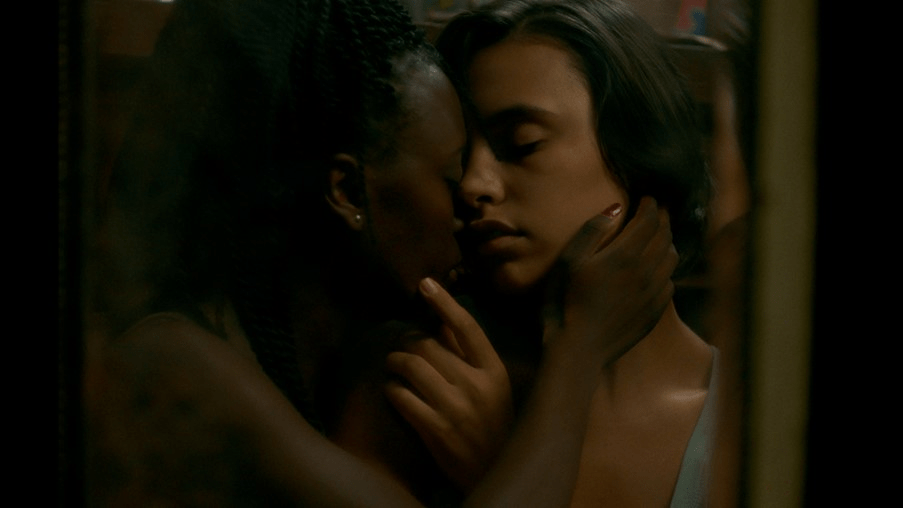
Part of Emilia’s quest is an exploration of her sexuality. Agustina San Martín who writes and directs puts the viewer in Emilia’s slightly voyeuristic position as she shyly studies other women through doorways or reflections on mirrored surfaces. Agustina San Martín’s camerawork frames the characters in the centre of the screen through doors to allow us to share Emilia’s cautious, hesitant approach.
The challenges faced by Emilia are likely to be psychological rather than physical; the confrontations taking place in her mind not reality. Agustina San Martín sets a dream-like atmosphere; the village, shrouded in mist, has a neverland quality. There is no evidence the Beast really exists, no bodies or surviving victims are shown and the efforts of the vigilantes to corner the creature (standing still and waving torches around) are laughably inept. It is likely the beast represents the casual male aggression which entitles a complete stranger to comment on Emilia’s backside.
Agustina San Martín prefers to let the slender storyline emerge gradually through background details or snatches of conversation to be assembled by the viewer. It makes for an interesting process although there is a sense of there being less here than meets the eye. The approach promotes over-thinking, and the audience starts to find significant details where actually none exist. Emilia covers her face with bubble wrap and her sister wears a beauty facial mask upon first appearance it is unlikely, however, these are meant to suggest some sort of deception or secret.
The conclusion, when reached, feels a bit underwhelming. Emilia has shown no evidence of past trauma, so her confrontation of her personal demon simply wraps up the story rather than serving as a cathartic release.
To Kill the Beast is screening at the Fragments Film Festival 2022.
