

Writer and Director: Emma Hawkins
Composer: Carrie Penn
Persephone is sick of staying at home helping Demeter, her mum, make things grow. So she takes to solitary walks in the woods at night, she meets a mysterious stranger, he takes her back to his underground kingdom and all kinds of badness happens up above. Zeus steps in to manage the disasters befalling his kingdom, and his deplorable behaviour makes everything much, much worse.
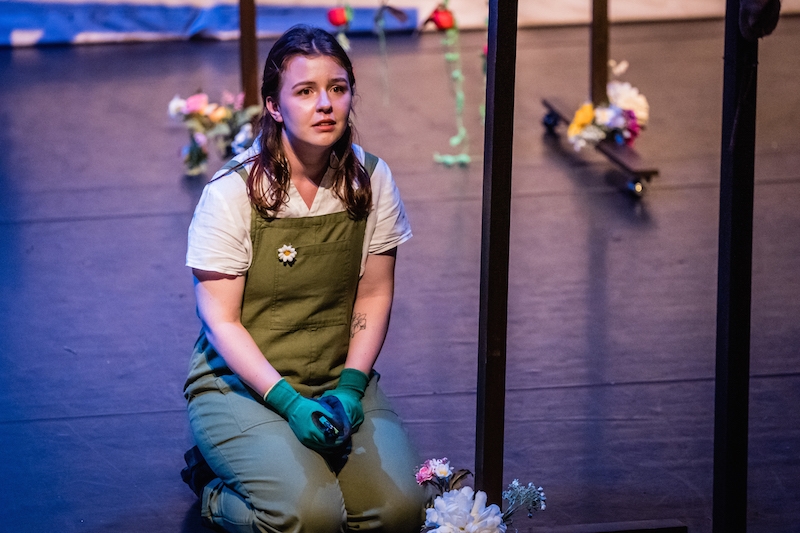
Emma Hawkins and Carrie Penn have created a musical that is very much about the domestic lives of Olympian gods and goddesses. They are a complicated, rivalrous, dysfunctional set of characters, all the male gods are manipulative cads, all the female goddesses are carrying intricate, unexplained trauma. Persephone is growing up into this snake-pit of coercive relationships, and watching her innocence get blasted away is the chief theme of the evening. She loves Hades, she is abused by Zeus his brother, she is betrayed by Hera, she is repressed by Demeter her mother, and Aphrodite offers her comfort without strings, but she’s too much of a party girl for Persephone’s comfort.
The musical has been brought to us by Jazz Hands Productions, the creation of Emma Hawkins, Carrie Penn, and four or five other Oxford students, undergraduate and post-graduate. The cast are similarly all current students, so the play features a lot of actors and techs of a similar age and a similar range of experience – there is a lot of enthusiasm on stage, and a lot of hesitant blocking and mumbly dialogue. This despite every actor having a very noticeable microphone strapped round their face even though the audience is only ten rows deep and the space is small. The songs are pleasant but a bit nondescript. It would be difficult to come out of the theatre humming anything. The set is made up of doorways on wheels, desks and tables, and a small sofa that is almost a character in its own right. The set pieces whizz around into a lot of patterns that are not hugely significant, and the pace of the show would improve if less time were spent adjusting doorways. The sofa earns its keep though.
There are a number of noteworthy dance sequences. Bethan Draycott as Persephone and Peter Todd as Hades have a very stylish and well-purposed pas de deux, with choreography by Max Penrose, that is one of the high spots of the evening. And while he never dances, and doesn’t sing much, Lorcan Cudlip-Cook’s louche lounge lizard of a Zeus is a very winning piece of acting. Abi Watkinson as Aphrodite seizes her moment with a big vamp number that kicks the second half into life, but the centre of the play is Draycott’s Persephone, confused, abused, unhappy. She hits the sympathetic notes of her betrayal and despair.
The 21st century feminist fable doesn’t quite emerge from the Greek legend. It is a brave effort, however. Picking out aspects of myths and classical stories that resonate particularly strongly today is currently popular. This re-purposing of the story of Persephone and Hades is a well-worked addition to that contemporary trope.
Runs until 21 August 2022
