

Writer: Jamie Sefton
Directors: Jamie Sefton and Jaq Bessell
In the late 1950s, the British set off nine nuclear explosions in the Pacific Ocean. Soldiers working in the area were told to turn around and close their eyes. A Ministry of Defence policy document found online says clinically, after explaining the monetary compensation available for nuclear veterans experiencing different types of cancer, “The policy is however, not an acknowledgement that those present at the tests were exposed to harm.”
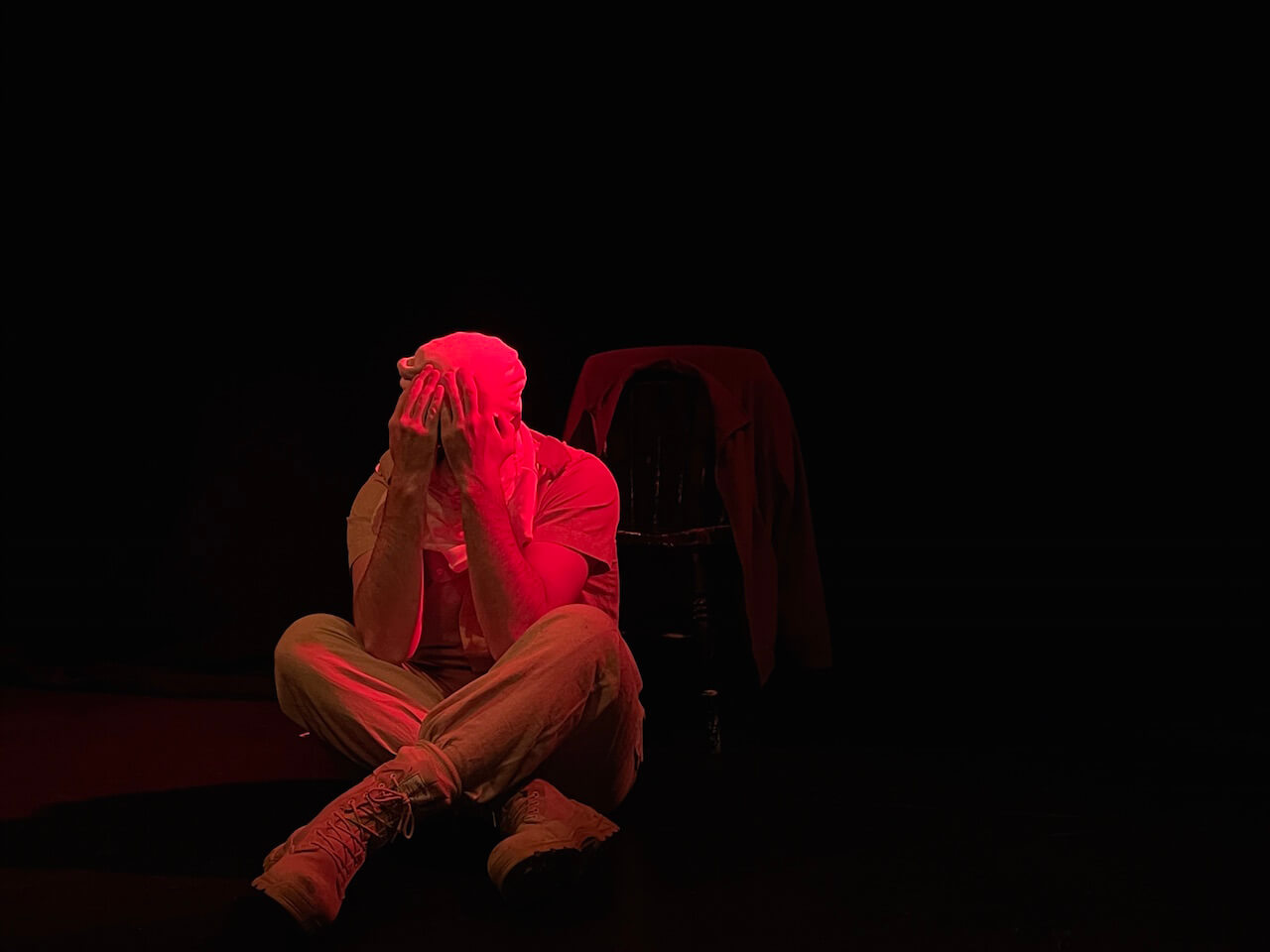
Jamie Sefton’s A Thousand Sons is a compelling and powerful one-man show, which presents the harrowing testimony of these nuclear veterans. It follows the story of the fictional Bertie Cooper (Sefton) through his experiences working on the nuclear tests at Christmas Island, and dealing with the aftermath.
The nervous and wide-eyed Bertie dashes from scene to scene, awkwardly trying to ingratiate himself with his fellow soldiers. He make awkward jokes – he isn’t a funny man – about how there’s always fish for dinner, about how Christmas Island doesn’t have any snow. It’s a tropical island paradise, a beautiful place with deep blue lagoons and blinding sun. It’s Eden before the entrance of sin. And then the bomb drops.
The horror of nuclear weapons is made painfully immediate: bright red lights, frighteningly loud sound effects, Bertie vulnerable with minimal protective equipment. “I can see through my closed eyes into the bones in my hand,” Bertie says, horrified, after the blast. “Why can I see the bones in my hand?”
In rhyming verse, he describes the black sky, the birds dropping burning from the sky, the soldiers battered by waves of sharp debris from the sea. The verse adds an unnatural and alien quality to Bertie’s inner monologue, and imposes a sense of urgency, something inevitable about it.
Bertie’s anger mounts as he grapples with the effects of the nuclear legacy on his own health, and the health of his children, and rails against the inadequate response of the British government. The script occasionally dips back into verse, where it is a little clunky now – with childishly simple language, and some rhymes that feel forced.
Throughout, the show is unashamedly a work of political theatre: it knows its position, and it makes that position clear. While this works well towards the end of the show, giving audience a tangible and almost hopeful takeaway, in earlier scenes it is somewhat distracting to have so much of the message presented so literally. Sefton should have more faith in the quality of his performance and in Bertie’s story: the narrative speaks for itself.
Reviewed on 11 July. Now moves to Edinburgh Fringe: 5-20 Aug at Greenside @ Nicholson Square, Fern Studios
