

Created by: By K&A
Reviewer: Lela Tredwell
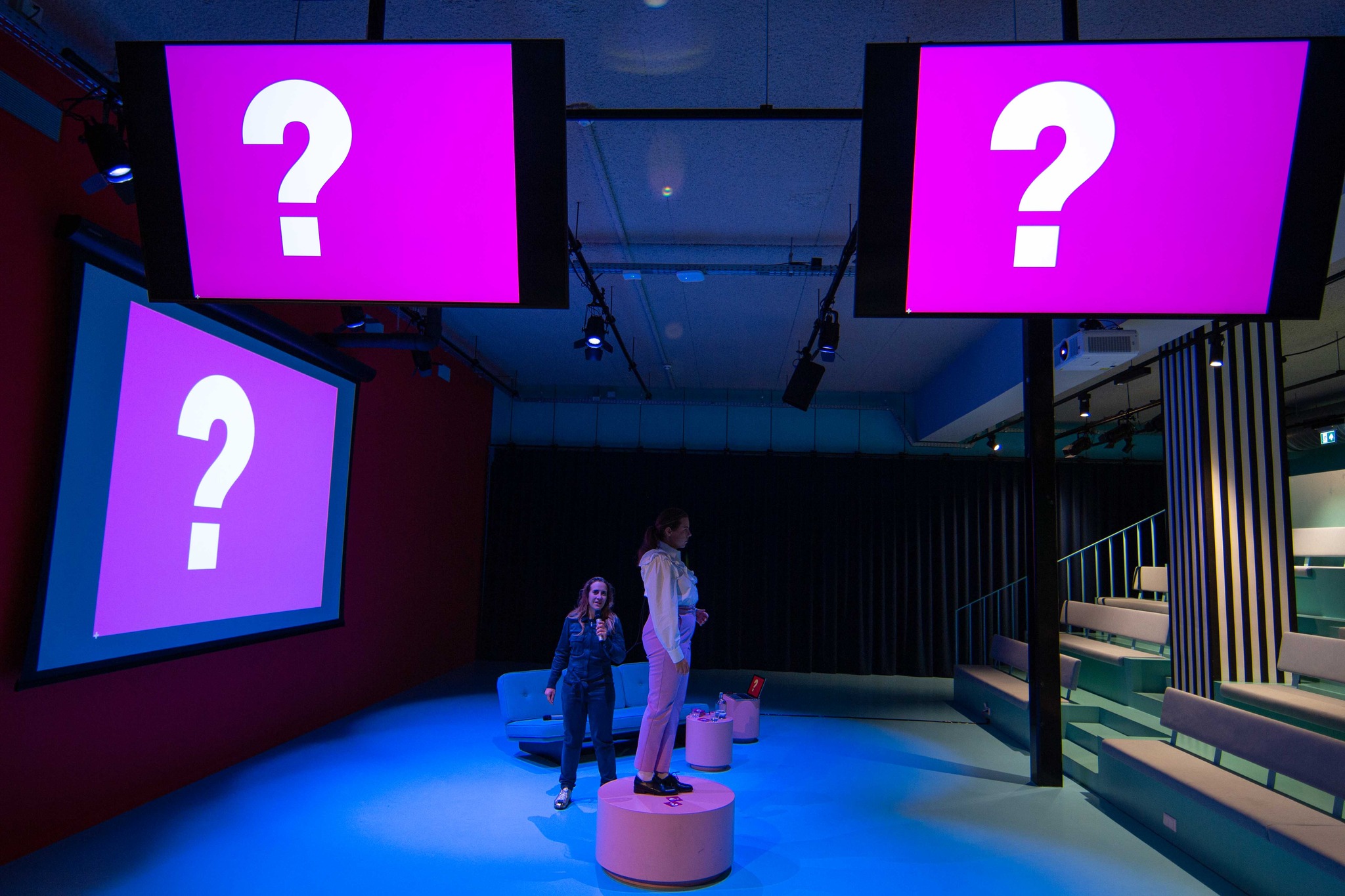
This unusual show takes the form of a Q&A session with an actress playing Sophia, a social robot.
The real Sophia, we are first introduced to through a video clip of a guest appearance she made on a television programme. Before us, is a different entity but we are invited to see this stand-in Sophia as the real deal. The actress playing Sophia helps us with the illusion by imitating robotic mannerisms.
This show relies heavily on audience participation. When we are given the opportunity to ask our ‘Sophia impersonator’ questions, the audience are hesitant, possibly because they are not sure what they care to ask this artificial intelligence imitation. The host instead asks some that have already been written down by previous audiences. The questions include: What rituals do you have? Do you brush your teeth? And why are you wearing pink trousers?
‘Our Sophia’ answers with a perfectly adequate reply concerning her trouser choice and yet the host seems dissatisfied for some reason so tries asking her again. Our Sophia slowly repeats the same answer she gave moments before. The way she talks is with a very, very long delay. This is not unlike the original robot but still it can be frustrating waiting for her to reply. If the purpose of this piece is to illustrate why you wouldn’t want to have a social interaction with a robot, it has achieved its aims.
The makers of this show, have claimed that this piece is designed to make us reflect on our treatment of otherness. However, the host’s behaviour isn’t appropriate towards anyone, so we can be forgiven for surmising some people are just rude. She patronises a young man in the audience, keeps calling on a woman who has made it very clear she does not want to speak, and fails to read out someone’s question on request. We keep waiting to have the reason for this revealed.
It seems that a lot of this show’s meaning has been lost in transmission. Perhaps the treatment of otherness might have been easier to spot as a theme if the original Sophia hadn’t been designed to look like a white female with a ‘flawless’ face, massive lips and very large breasts. This does raise questions as to why the makers of the original robot felt this necessary and even why social robots should be female at all.
Meanwhile our stand-in Sophia clumsily discusses gender, dismissing some identities as being not valid for social purposes. There would be the opportunity to dig into this further and explore these assumptions and where they have come from but along with discovering how the original Sophia became the citizen of a country, this is lost.
The parameters of this piece are unclear which make it hard to engage with. Towards the end of the piece the host asks a member of the audience to stand in for our Sophia while another video is played of the real Sophia. In this clip she is not answering a question about where her words are coming from. We watch a silent robot silently, as an impersonator of a robot impersonator watches back silently over our heads.
We leave wondering why this show got made and what was the meaning of any of it. Our
questions go unanswered. Or maybe there’s just a very, very long delay.
Reviewed on 28th May.
