

Writer: Sînziana Cojocărescu
Director: Nico Vaccari
‘Take a leap into the darkness with us’ proclaims the promotional material for How to Break a Detention Centre. It lives up to its promise: the viewer is immediately plunged into the disturbing world of ‘Derwentside Immigration Removal Centre’, and more specifically the trauma of two incarcerated women.
A co-production between UK-based BÉZNĂ Theatre and Romanian Giuvlipen (the name translates as ‘feminism’), How to Break a Detention Centre is a powerful migrant-led exposé of the barely reported female experience of British detention centres, the script by Sînziana Cojocărescu apparently based on real-life accounts. Expect a difficult 75 minutes that feature miscarriage, suicide and war trauma in a story that centres around two detainees, Sudanese Faiza (Alaa Taha) and Romanian Maria (Zita Moldovan).
Representing the figures of authority in the camp are Romanian-born nurse Elena (Mihaela Drăgan) and guard Kelly (Lizzie Clarke), both of whom find themselves conflicted by the suffering they witness. All four actors are devastatingly convincing in the roles they play.
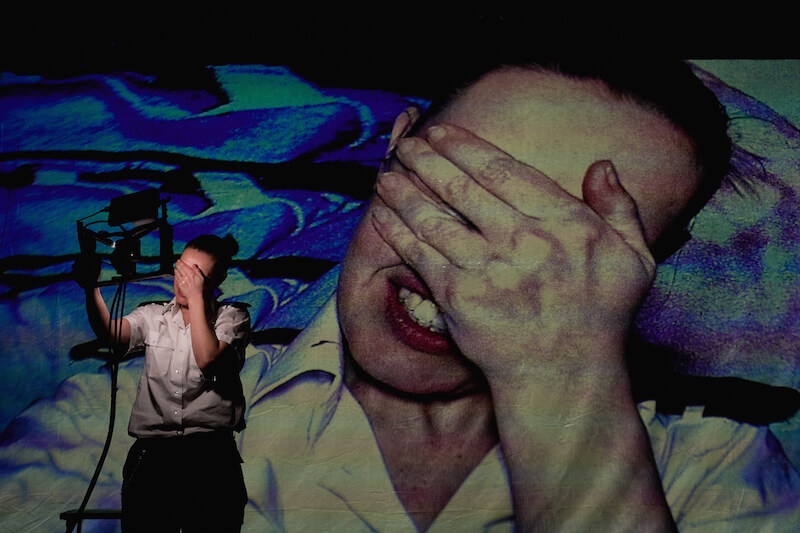
While Nico Vaccari’s production predominantly focuses on scenes of naturalistic dialogue driving forward the four women’s stories, the narrative is intercut with multidisciplinary elements, not experimental in themselves, but certainly in their application, and with mixed results. Some of the projection across a full-stage backcloth looks superb, even if the gradual defacing of a drawing of a house is predictable. It is, however, aesthetically awkward switching between unlit canvas and film sequences, and still images could surely fill the gaps without detracting from the stage action. It is also not obvious what the hand-held camera work is adding to the production – if we are saying emotionally heightened moments need accenting with close-ups, then theatre is in trouble.
Most frustrating is the use of microphones on stands. Presumably intended to signal multi-roling and interior monologues, they simply restrict the movement of the actor and create another unnecessary jarring effect with the switching of voices in and out of amplification. The relevance of a live rendition of The House of the Rising Sun is also questionable. Far more impactful in generating a sinister atmosphere is the excellent drone music of Dan Balfour.
One leaves the production feeling that its multidisciplinary elements could be directed more purposefully towards political ends (perhaps supporting the narrative with direct evidence), but this does not diminish the power of the human drama witnessed or the urge to Google detention centres once back in the comfort of the homes denied to the victims of such inhumanity.
Runs until 8 March 2023
